
INTRODUCTION
If you have seen the term oxygen free copper meaning on a wire label or product page, it can feel more technical than it really is. Oxygen free copper meaning is simple once you break it down. It is copper made with very low oxygen so it can perform better in certain demanding jobs.
In this guide, you will learn what oxygen free copper meaning really is, when it matters, and whether it is actually better than regular copper. You will also see how it compares with common copper grades and what copper costs today.
What Oxygen Free Copper Meaning Really Is
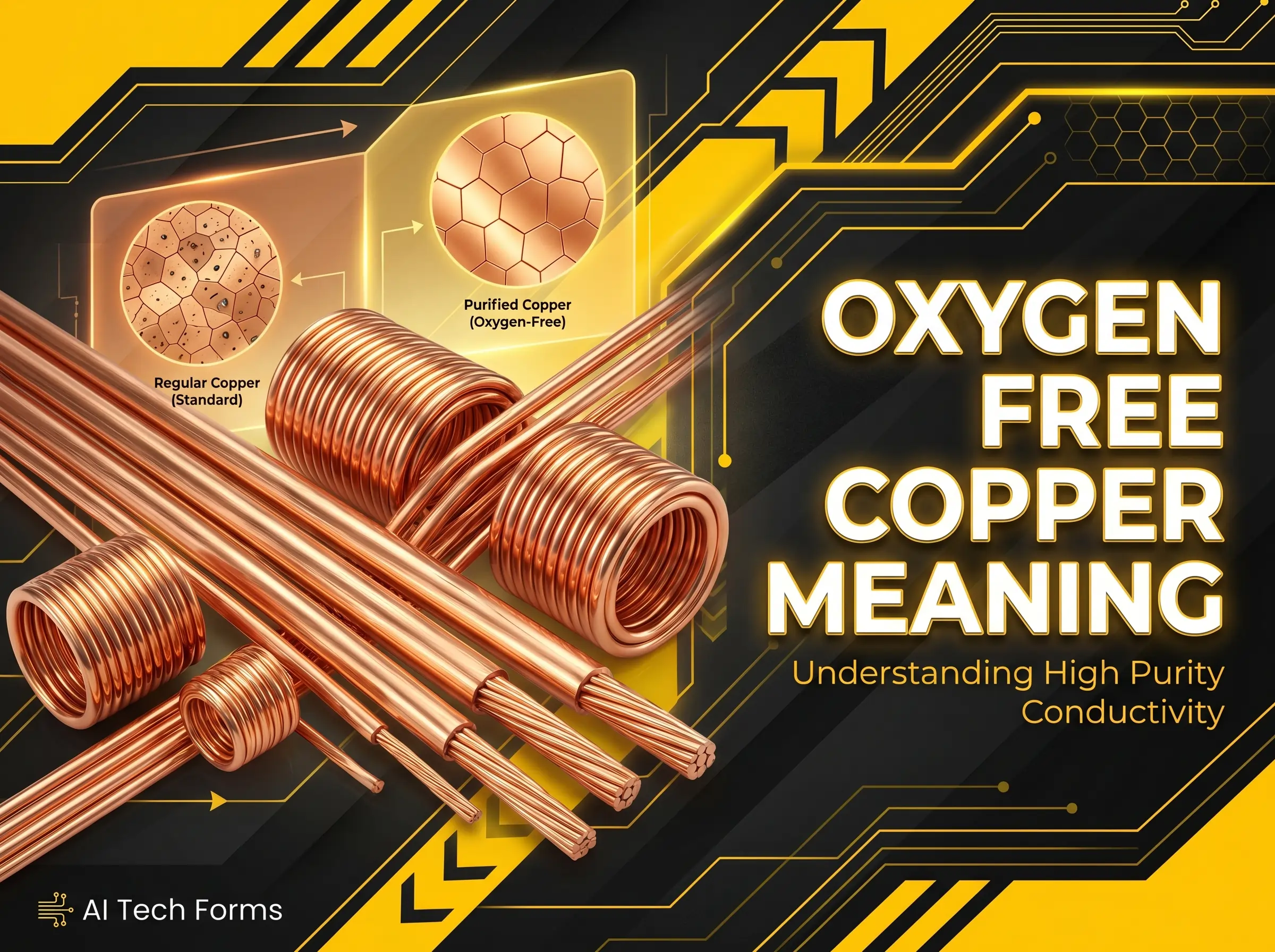
Oxygen free copper meaning refers to copper that has almost no oxygen inside it. ASTM defines oxygen free copper as copper with oxygen not more than 0.0010 percent or 10 ppm. That is why it is treated as a special high purity grade rather than ordinary copper.
The simple idea is this. Less oxygen means fewer problems in some uses. That can help when the copper must be welded, brazed, or used in very clean and sensitive electronic work. Copper.org also notes that oxygen free copper is made under non oxidizing conditions and is used where ease of welding and brazing matter.
Why the name matters
The name does not mean the copper is magic. It means the copper was processed to remove oxygen as much as possible. In practice, that gives you a cleaner metal with very high purity and better behavior in specific applications. ASTM and copper.org both describe oxygen free grades as highly refined copper with very low oxygen content.
How Oxygen Free Copper Is Different From Regular Copper
Regular high conductivity copper is already very good. Copper.org says the common electrical wire grade ETP copper contains a minimum of 99.90 percent copper and has oxygen as the principal secondary element. It is widely used for wire, cable, busbars, and windings.
Oxygen free copper goes a step further. Copper.org says certified oxygen free high conductivity copper can contain a minimum of 99.99 percent copper. It also notes that this grade is used for high vacuum electronic applications and that removing oxygen helps avoid certain welding problems.
The common wire grade
The most common comparison point is ETP copper. Copper.org says C11000 has 99.95 percent Cu and 0.03 percent O2 and delivers conductivity above 100 percent IACS. That is why many ordinary electrical jobs do not need oxygen free copper at all.
Is Oxygen Free Copper Better
The honest answer is yes and no. Oxygen free copper is better for some jobs, but not for every job. It is a stronger choice when you need high purity, excellent ductility, clean brazing or welding behavior, or high vacuum performance.
For normal home wiring or many standard electrical uses, regular high conductivity copper is already very effective. Copper.org describes ETP copper as the most commonly used grade for most electrical applications, while oxygen free copper is used when special performance is needed. That means oxygen free copper is not automatically the best copper in every situation.
A useful way to think about oxygen free copper meaning is this. It is not a universal upgrade. It is a specialist material that solves specific problems better than standard copper does. That is the real reason people pay attention to it.
Which Type Of Copper Is Best
If you are asking which type of copper is best, the answer depends on the job. For most electrical work, high conductivity ETP copper is the practical choice because it is common, effective, and widely used. Copper.org specifically says it is used for most electrical applications such as wire and cable.
If the job involves welding, brazing, or high vacuum electronics, oxygen free copper is usually the better choice. Copper.org says oxygen free grades are used where ease of welding and brazing are especially important and in high vacuum electronic applications such as transmitter tubes, waveguide tubes, linear accelerators, and glass to metal seals.
So the best copper is the one that matches the use case. The fresher insight many buyers miss is this. The real decision is not just purity. It is purity plus form plus standard plus end use. A copper grade that is perfect for a vacuum device may be unnecessary for a power cable.
How Much Is Oxygen Free Copper Today
Copper prices move every day. On April 28, 2026, Trading Economics reported copper at 6.01 USD per pound. That equals about 13.25 USD per kilogram. Trading Economics also notes that its copper price is a general market reference and not an official benchmark.
That gives you a useful starting point for oxygen free copper meaning in the real world. The raw metal value is tied to the copper market, but the finished price of oxygen free copper can vary by form, supplier, processing, and grade. So the answer to how much oxygen free copper costs is that there is no single fixed price.
When Oxygen Free Copper Is Worth The Cost
Oxygen free copper is worth considering when the application is sensitive. That includes high frequency electronics, vacuum equipment, special connectors, and places where soldering or brazing quality matters a lot. Copper.org highlights those exact use cases.
It can also make sense when the buyer wants very high purity copper for a technical build. ASTM describes oxygen free grades as copper made without metallic or metaloidal deoxidizers and limited to extremely low oxygen content. That is a strong sign that the material is meant for controlled, demanding environments.
For everyday wiring, the extra cost may not be worth it. Standard copper already performs very well in most electrical systems. That is why many people should focus on the right grade instead of assuming the purest copper is always the smartest choice.
How To Read Copper Labels Without Confusion
When you see copper labels, look at the grade and the application. If you see C11000, that is the common ETP grade. If you see C10100 or C10200, that points to oxygen free electrolytic copper grades. ASTM identifies C10100 as OFE and C10200 as OF.
This matters because copper grades are not just marketing terms. They describe how the metal was made and what it is best at. Once you understand oxygen free copper meaning, the label becomes much easier to read and the buying decision becomes much clearer.
Why Search Interest Around Oxygen Free Copper Is Growing
People search for oxygen free copper meaning because they usually want a simple buying answer. They may be comparing wire, audio gear, electrical parts, or industrial materials and want to know if the higher grade is worth it. The question is practical, not academic.
The most useful answer is also the simplest one. Oxygen free copper is a highly refined copper grade with very low oxygen that is valued for special electrical and fabrication needs. It is not a replacement for all copper. It is a better fit for specific jobs.
FAQ’s
Q1. Which type of copper is best?
For most electrical applications, high conductivity ETP copper is usually the best practical choice. For welding, brazing, or high vacuum work, oxygen free copper is the better fit.
Q2. How much is oxygen-free copper?
There is no single fixed price because the final cost depends on grade, shape, and supplier. As a market reference, copper was about 6.01 USD per pound on April 28, 2026, which is about 13.25 USD per kilogram.
Q3. Is oxygen-free copper better?
It is better for some uses and unnecessary for others. It works especially well when you need very low oxygen content, clean fabrication, or high vacuum performance.
Q4. How much is 1 kg of copper today?
Using the April 28, 2026 market reference, 1 kg of copper is about 13.25 USD. That is a benchmark figure, so actual buying prices can still differ.
Q5. How much for 1 kg of copper?
The same benchmark puts 1 kg of copper at about 13.25 USD today. If you are buying a finished oxygen free copper product, the final price may be higher than raw market copper.
CONCLUSION
Oxygen free copper meaning is simple once you strip away the technical language. It is a highly refined copper grade with very low oxygen content that is best for special electrical and fabrication uses. For ordinary wiring, standard copper is often enough. For demanding work, oxygen free copper can be the better choice.
If you are comparing copper grades for a project, start with the application first and the grade second. That is the easiest way to choose the right material without wasting money. Read more at Ai Tech Forms.
