
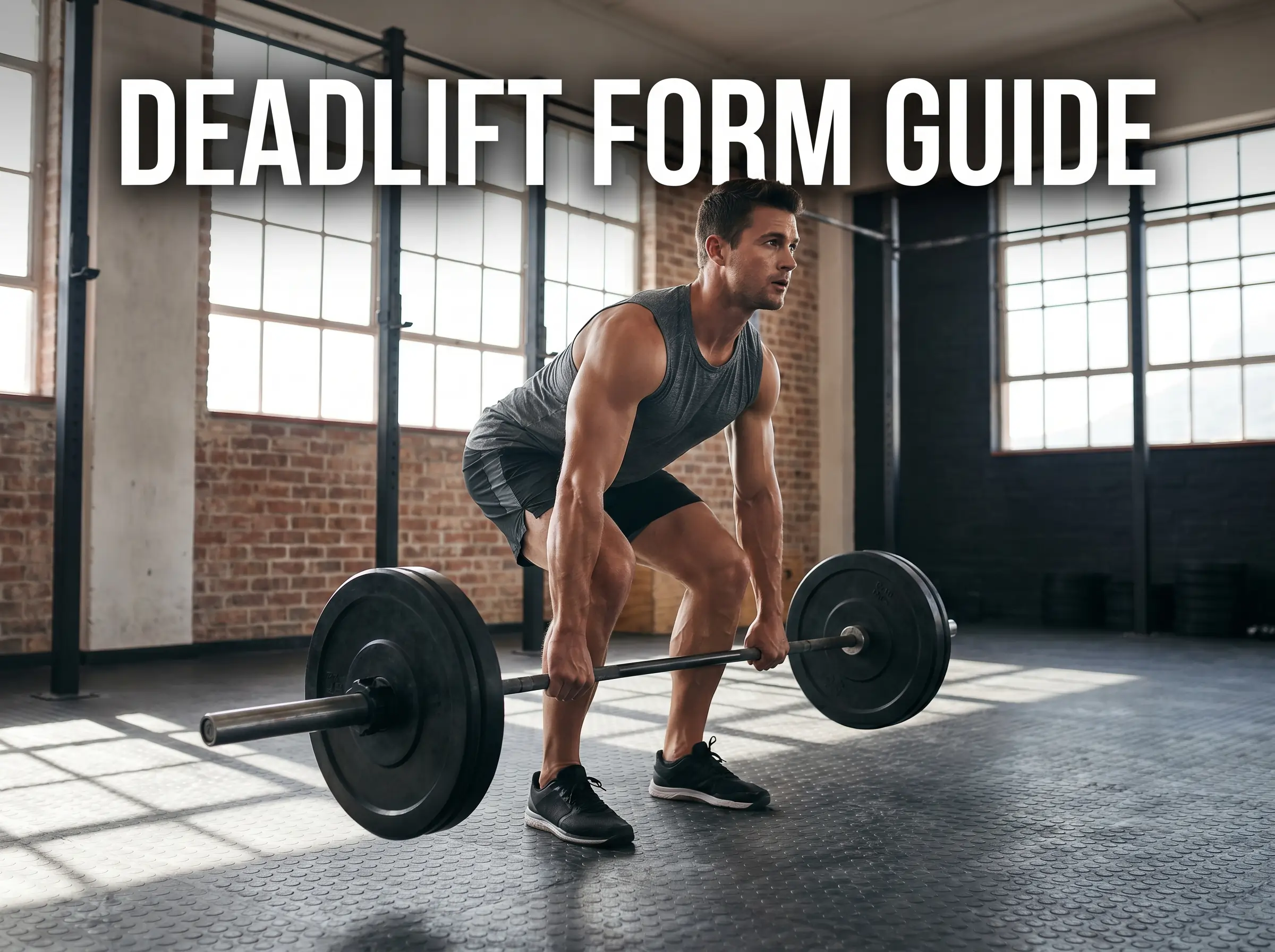
Deadlift form can make you stronger, but deadlift form can also expose every weak point in your setup. If your deadlift form is sloppy, the bar feels heavier than it should, your back takes over, and progress stalls fast. This guide shows you how to pull with better position, better tension, and better control so the lift starts feeling natural.
Why deadlift form matters
It turns effort into force
The deadlift looks simple from the outside. You walk up to the bar, grip it, and stand up. But the real lift starts before the bar leaves the floor, because the setup decides whether the rest of the rep feels stable or rushed. ACE describes the deadlift as a hinge pattern with the bar kept close and the back held flat, while NSCA coaching guidance also stresses strong positioning and tension before the pull begins.
Good deadlift form gives you a stronger base, a safer spine position, and a cleaner bar path. That means you can move more weight with less wasted effort. It also means you are less likely to turn every heavy set into a lower back survival test. Mayo Clinic also notes that proper form matters and that lifters should lower the weight if they cannot keep good technique.
It protects your progress
A lot of lifters chase numbers too early. They load the bar because it looks serious, not because their position is ready for it. That usually creates the same problem again and again. The bar feels fine on the first rep, then the hips shoot up, the back rounds, and the whole lift turns into a grind.
You do not need a perfect pull on day one. You need a repeatable one. That is the difference between training the movement and just surviving the set. Good deadlift form is not about looking advanced. It is about making every rep more useful than the last one.
How to set up the lift the right way
Build your base first
Your setup starts with your feet. Stand close to the bar with your midfoot under it, then set your stance so it feels balanced and stable. ACE recommends a stance around shoulder width with the toes slightly turned out, and it also notes that the shins should stay close to the bar.
Once your feet are set, hinge at the hips and reach for the bar without collapsing your chest. Your shins should move toward the bar, but you do not want to shove them so far forward that the bar gets pushed away from your body. The goal is to stay close without crowding the bar. ACE and NSCA both frame the movement as a hip hinge rather than a squat pattern, which is the key idea to keep in mind.
Lock in your brace before the pull
Before the pull, tighten your upper back and brace your trunk. Think about pulling tension into your body before anything moves. If you skip that step, the first inch off the floor often becomes the messiest part of the rep.
The setup should feel organized, not rushed. You are building pressure from the ground up. When the setup is right, the bar comes off the floor like it was waiting for permission. That is one of the clearest signs that your deadlift form is starting to click.
What a strong deadlift position looks like
Keep the body stacked
A strong deadlift position is not just about having a flat back. It is about holding your body in a shape that lets force move from your feet to the bar without leaking out through your spine or shoulders. ACE emphasizes keeping the back flat, the chest up, and the bar close while the body drives through the floor.
Your chest should stay proud without over-arching. Your ribs should not flare hard. Your hips should be high enough to hinge, but not so high that the lift turns into a stiff leg pull before the bar even moves. That balance is what keeps the movement efficient instead of awkward.
Let the arms stay quiet
Your arms should stay long and relaxed, but not loose. They are hooks, not engines. The moment the arms start trying to lift the bar, the movement usually gets ugly.
A lot of people think better deadlift form means looking more dramatic. It usually means the opposite. The cleanest reps often look controlled, quiet, and almost plain. That is a good sign. It means the right muscles are doing the job instead of the wrong ones stealing the work.
How to breathe and brace before the pull
Build pressure around the torso
Bracing is one of the most overlooked skills in strength training. If your trunk is soft, the rest of the lift has to do extra work to protect you. That usually shows up as a shaky pull, a slow first rep, or a back that gets tired long before your legs do.
Take a breath before you start the rep, then lock your midsection like you are getting ready for a punch. The point is not to suck in your stomach. The point is to create pressure around your torso so your spine stays more stable. Mayo Clinic notes that proper form matters during strength training and that lifters should use controlled breathing rather than careless strain.
Hold tension through the hardest part
You do not need to hold tension forever, but you do need to keep it long enough to move the bar through the hardest part of the lift. Most lifters lose their brace right when the bar is breaking the floor. That is usually the moment they need it most.
If you breathe and brace well, the pull starts feeling cleaner right away. The bar moves with less wobble, and your back stops feeling like the only thing keeping the rep alive. That is one of the biggest upgrades you can make without changing the exercise at all.
What the bar path should feel like
Keep the bar close
The bar should stay close to your body through the whole lift. If it drifts forward, the lever gets longer and the lift gets harder. That is one of the fastest ways to make deadlift form fall apart, and ACE specifically coaches lifters to keep the bar path tight while pushing the hips through.
Think of the bar as traveling in a tight line up your legs. It should not swing away from you or loop out in front. When that happens, the load moves farther from your center and your body has to fight to bring it back.
Use the upper back to help control it
This is where your lats matter. A tight upper back helps keep the bar close and stops it from drifting early. If the bar feels like it is floating away from you, the problem is often not your grip. It is usually your body position and tension. NSCA coaching cues also emphasize upper back engagement and strong positioning through the pull.
A clean bar path also makes the lockout easier. If you had to fight the bar all the way up because it wandered forward, the top usually feels ugly too. A tight path keeps the whole rep cleaner from start to finish.
Common deadlift mistakes that slow progress
Turning the lift into a squat
One of the biggest mistakes is turning the deadlift into a squat. When the hips drop too low, the knees get in the way and the pull gets weak before it even starts. The deadlift is a hinge, not a squat, and ACE is clear that the movement should be built around the hips and posterior chain.
Rounding the back and rushing the rep
Another common mistake is rounding the lower back because the lifter wants to reach the floor faster. That usually happens when someone chases depth instead of tension. The floor is not the goal. Control is the goal. Mayo Clinic warns that poor technique can lead to muscle strains and other painful injuries, which is why good mechanics matter so much.
Some lifters also pull with the arms. That does not help the bar rise. It just adds tension where tension does not belong and makes the lift feel less stable. The arms should stay connected to the bar, not try to start the lift.
Then there is the overfinished lockout. You see this when someone throws the shoulders back and leans too far at the top. That extra motion does not make the rep better. It usually just adds stress where you do not need it.
Each of these mistakes has a fix, but the fix starts with patience. Slow the setup down. Make the first rep look like you meant to do it. That alone solves more problems than people expect.
How to fix deadlift form when it keeps breaking down
Lower the load and rebuild the pattern
If your deadlift form keeps falling apart under heavier weight, lower the load and rebuild the pattern. That is not a setback. That is how real progress gets made. Mayo Clinic is direct about this. If you cannot keep good form, reduce the weight or the repetitions.
Start by filming your lift from the side. You will usually spot the main issue fast. Maybe the bar is drifting forward. Maybe your hips are shooting up too early. Maybe your back position changes before the bar even leaves the floor.
Fix one thing at a time
Then change only one thing at a time. If you try to fix your stance, your brace, your grip, and your lockout all in one session, you will not know what helped. One adjustment gives you better feedback than five guesses.
You can also use pauses and lighter top sets to teach control. A paused pull just off the floor can show you whether your setup is actually strong. If you cannot hold position there, adding more weight will not fix the problem.
The best correction is often boring. Better position. Better tension. Less rush. That is usually what makes the lift look and feel different.
Which variation is best if you are still learning
Use the variation that teaches the hinge
Not every lifter should start with the same version of the deadlift. Some people learn best with a barbell pull from the floor. Others need a slightly easier variation first so they can learn the hinge without fighting too much load. ACE notes the standard deadlift as a barbell movement, and NSCA also discusses related hinge work such as the Romanian deadlift as a useful variation for strength development.
A Romanian deadlift can help you feel the hips moving back and the hamstrings staying loaded. A block pull can help if the floor position is the hardest part. A trap bar deadlift can feel more natural for some lifters because the load stays centered. The best variation is the one that lets you train the pattern well.
Move back to the full lift with confidence
If a lift keeps turning into a grind, the variation is too advanced for your current control. That does not mean you are weak. It means the movement choice needs to match your current skill.
Once your position improves, you can move back to the full lift with more confidence. That is how you build strength without forcing your body to guess its way through every rep.
How often you should practice the movement
Train enough to learn it
You do not need to deadlift heavy all the time. In fact, that usually makes technique worse, not better. The movement improves when you practice it enough to learn it, but not so much that every session turns into a fatigue battle.
Most lifters do well with a few quality exposures each week. One day can focus on heavier work. Another day can focus on technique or a lighter variation. That gives you practice without turning every session into a max effort test.
Keep fatigue under control
If your lower back is always tired, your volume is probably too high or your form is leaking. Fatigue makes bad positions feel normal. That is why sensible programming matters just as much as the lift itself. Mayo Clinic also notes that major muscle groups can be trained at least two times a week as part of a sound strength routine.
Better form comes from repeatable training. Not from forcing your body to prove something every workout. The deadlift rewards consistency more than drama.
Why people keep searching for deadlift form
They want strength without pain
People usually search deadlift form for one of three reasons. They want to get stronger, they want to stop their back from hurting, or they want to know if their technique is good enough to add weight. All three are fair reasons.
The good news is that the deadlift is learnable. You do not need elite genetics to improve it. You need a clear setup, a real brace, and the discipline to stay close to the bar. ACE, Mayo Clinic, and NSCA all point toward the same core idea. Position and control matter more than forcing the bar up any way you can.
Small changes make a big difference
That is also why this lift gets so much attention. Small changes in position can create big changes in performance. A cleaner setup can make the same weight feel lighter without changing the program at all.
And that is the real payoff. Better movement gives you better numbers later. It also gives you more confidence every time you walk up to the bar.
FAQs
Q1. How do I know if my deadlift form is good?
Your deadlift form is probably solid if the bar stays close, your back position stays steady, and the lift feels like a leg and hip effort instead of a back tug. A video from the side can help you spot whether your hips, shoulders, and bar are working together. ACE and NSCA both emphasize close bar path and strong position as major signs of a better lift.
Q2. Should my back be straight during the deadlift?
Yes, your back should stay neutral and controlled. It does not have to be rigid like a board, but it should not round under load. ACE and Mayo Clinic both stress keeping proper form and reducing load if you cannot hold that position.
Q3. Why do I feel deadlifts mostly in my lower back?
That usually means your hips, brace, or bar path are off. If the bar drifts away or your chest drops early, the lower back ends up doing more work than it should. Lower the weight and clean up the setup first.
Q4. What is the biggest mistake beginners make?
The biggest mistake is trying to lift too heavy before the movement is learned. That leads to rushed setup, poor tension, and sloppy reps. Most beginners do better when they treat the deadlift like a skill, not just a strength test.
Q5. Is the deadlift safe for beginners?
Yes, it can be safe for beginners when it is taught with proper form and sensible loading. The key is learning the hinge, bracing well, and staying honest about what your body can control. Heavy weight should come later, not first.
Q6. Should I use a mixed grip right away?
Not necessarily. A standard grip is usually enough while you are learning the movement. A mixed grip can help on heavier sets later, but the important part is still the same. The bar must stay close and your position must stay tight. ACE notes a mixed grip as a common option for the standard barbell deadlift.
Conclusion
Strong deadlifting starts with a better setup, not a bigger ego. If you keep the bar close, brace hard, and stay patient through the first pull off the floor, your deadlift form gets stronger fast.
The best lifters are not the ones who rush every rep. They are the ones who repeat clean positions until those positions become automatic. Start with control, fix one mistake at a time, and let the strength build from there.
