
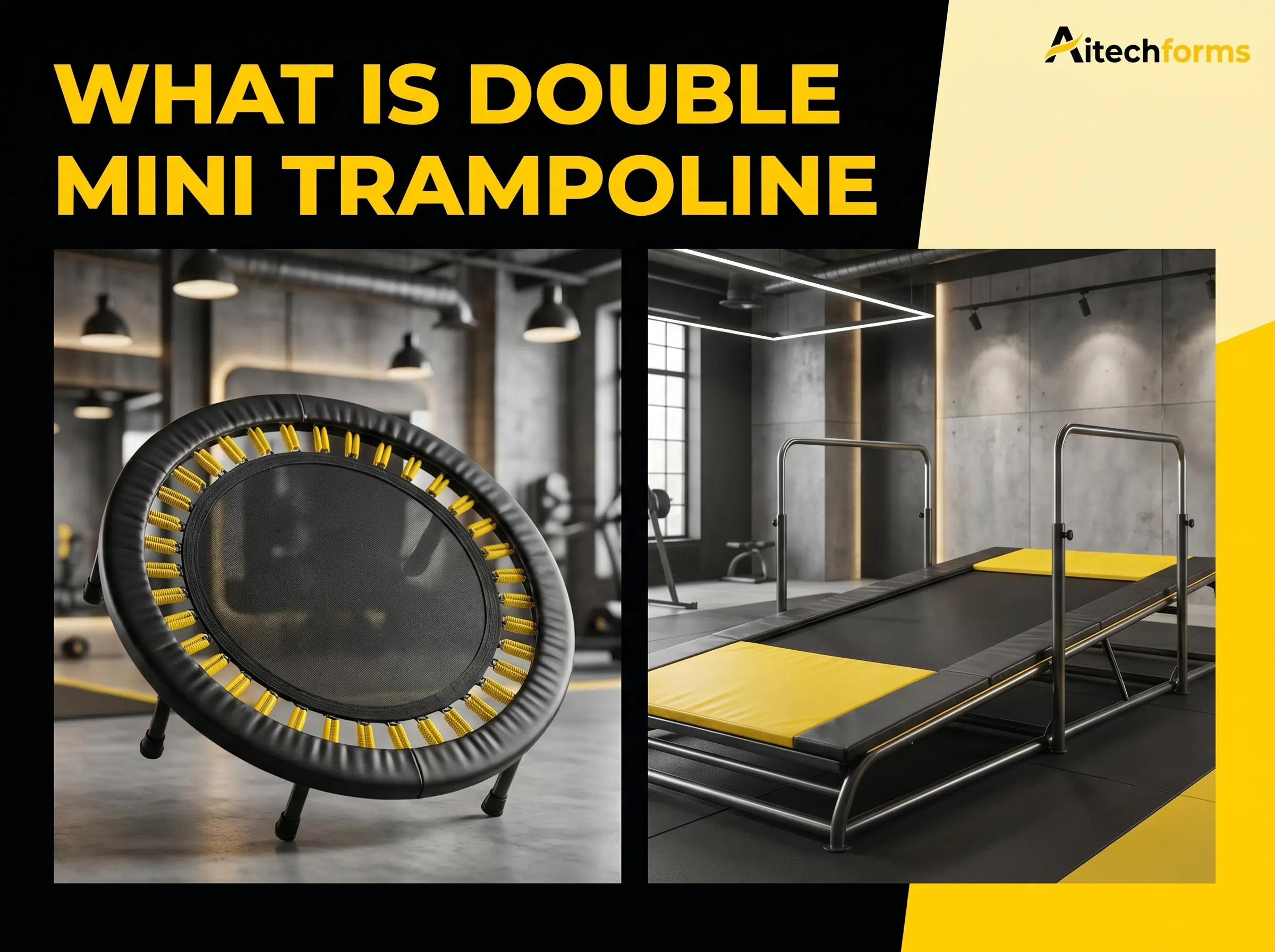
What Is Double Mini Trampoline
A double mini trampoline is a gymnastics apparatus, not just a small home fitness trampoline. In gymnastics, athletes sprint down a runway, jump onto the apparatus, and perform twisting or flipping skills before landing on a mat. The official FIG description says a routine has two flight elements and a final landing. Gymnastics Canada also describes it as a small trampoline with two sections used for aerial skills and a mat landing.
Table of Contents
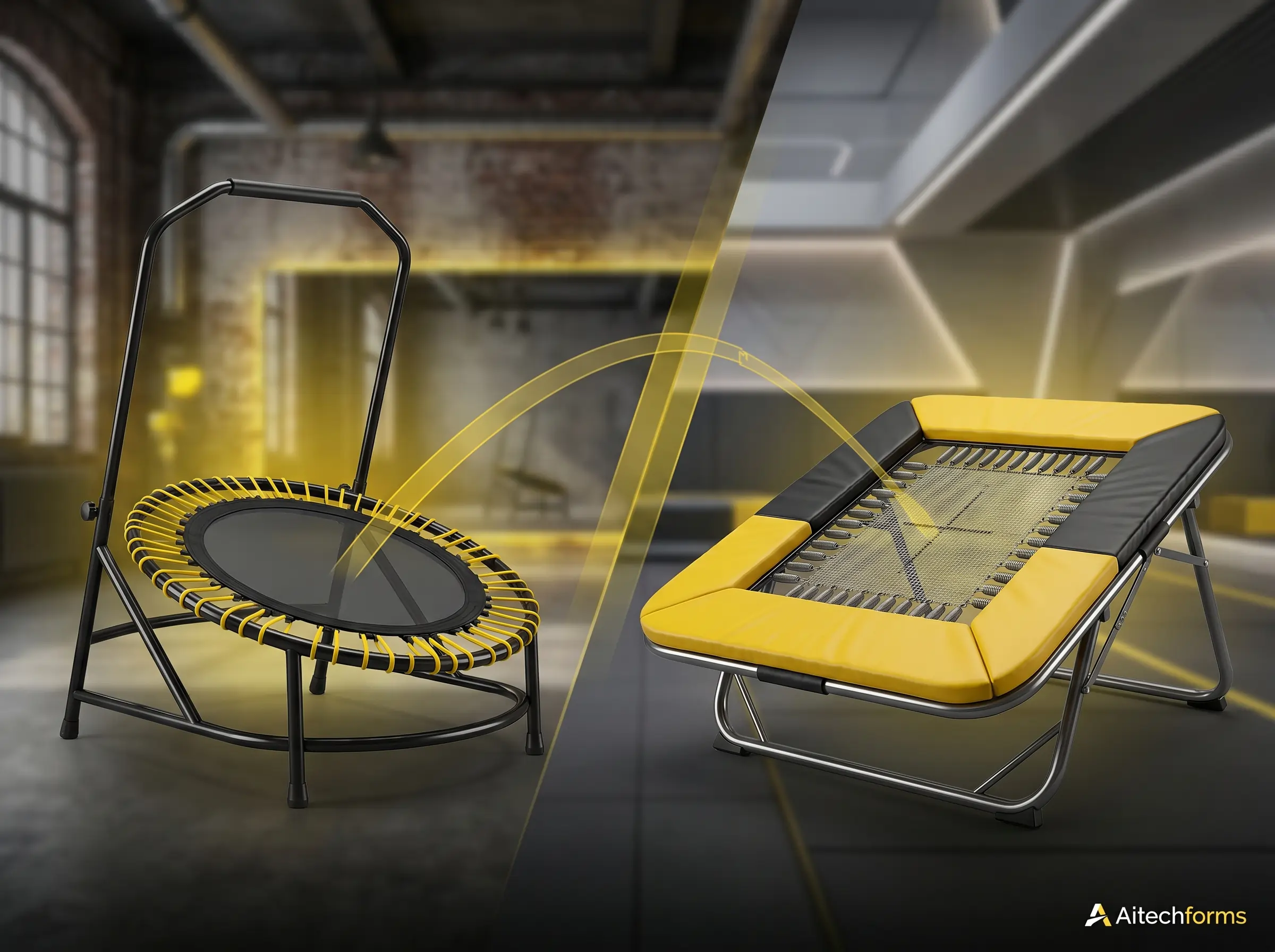
ToggleThe reason this topic gets confusing is simple. People often use “double mini trampoline” to mean a fitness rebounder, but in sport it refers to a specific competitive gymnastics event. A rebounder is the mini trampoline many people use for home workouts, while double mini trampoline is the technical name used in trampoline gymnastics.
Why Is It Called Double Mini
It is called double mini because the apparatus combines two jumping areas in one compact design. The gymnast mounts the sloped section first, then moves to the flat section, and finishes with a landing on the mat. That two section layout is the core of the name.
In other words, the word “double” points to the two part structure, and “mini” points to the smaller size compared with a full competition trampoline. This is why it is different from a normal backyard trampoline and different again from a fitness rebounder.
What Are Mini Trampolines Used For
Mini trampolines are commonly used for rebounding workouts, balance training, coordination work, and cardio exercise. Cleveland Clinic describes rebounding as jumping on a rebounder and notes that it can improve strength, bone density, balance, coordination, heart health, and stress relief.
For everyday users, the fitness version is popular because it is compact and low impact compared with many ground based workouts. That makes it attractive for people who want movement at home without a lot of space. Cleveland Clinic also notes that simple moves like jumping jacks and jogging in place are common beginner exercises on a rebounder.
Can A Trampoline Help With Lymphatic Drainage
Exercise can support the lymphatic system, but it is better to be precise here. The National Cancer Institute says exercise is a natural pump for the lymph system and may improve lymph fluid flow. The NCI also says exercise may help treat lymphedema or lower risk in some cases, but it recommends speaking with a doctor about a safe program.
That said, there is not strong proof that a rebounder or trampoline specifically “drains” the lymphatic system in a magical way. The more accurate claim is that movement, muscle contraction, and regular activity can support circulation and lymph flow. So the benefit comes from exercise itself, not from the trampoline as a special cure.
How Many Minutes A Day Should You Use A Rebounder
For general fitness, the best benchmark is the adult activity guideline. The CDC says adults need at least 150 minutes of moderate intensity physical activity each week, or 75 minutes of vigorous activity, plus muscle strengthening on two days a week. It also says that activity can be broken into smaller chunks across the week.
So a practical rebounder routine is often 10 to 30 minutes a day depending on your fitness level, intensity, and goals. That is an inference based on the CDC’s weekly target, not a strict rule. A beginner can start with a few minutes, then build up over time until the weekly total makes sense for their body and schedule.
A Simple Answer For Searchers
If someone asks what a double mini trampoline is, the short answer is this. In gymnastics, it is a small apparatus with an angled section and a flat section used for running, jumping, twisting, and landing. In fitness, people often mean a rebounder when they say mini trampoline.
Safety Notes Before You Start
Mini trampoline workouts can be useful, but safety matters. Cleveland Clinic advises beginners to start with simple movements, keep balance in mind, and check with a doctor if they have concerns about how rebounding may affect their body. It also warns that even small rebounders can be dangerous for young children.
FAQ’s
Q1. What Is A Double Trampoline?
In gymnastics, the correct term is double mini trampoline, not just double trampoline. It is a small apparatus with two jumping sections that leads into a mat landing.
Q2. What Is The Difference Between A Rebounder And A Double Mini Trampoline?
A rebounder is usually a fitness mini trampoline for exercise. A double mini trampoline is a gymnastics apparatus used for run up passes, aerial skills, and landing drills.
Q3. Is A Mini Trampoline Good For Exercise?
Yes. Cleveland Clinic says rebounding can help with strength, balance, coordination, heart health, and stress relief.
Q4. Can A Trampoline Help With Lymphatic Drainage?
Exercise can support lymph flow, and the NCI says exercise acts like a natural pump for the lymph system. But it should not be treated as a guaranteed medical fix.
Q5. How Long Should A Beginner Use A Rebounder?
Start small. A few minutes is enough at first, then build gradually until your weekly movement adds up toward the CDC guideline of 150 minutes of moderate activity.
Conclusion
A double mini trampoline is a real gymnastics apparatus with two sections and a landing phase. A rebounder is the fitness version most people use at home. Both can help people move more, but the research story is strongest for general exercise benefits like balance, strength, and circulation. For lymphatic support, the honest answer is that movement helps, but the trampoline itself is not a cure.
Learn more useful fitness and AI guides on https://aitechforms.com/.
