
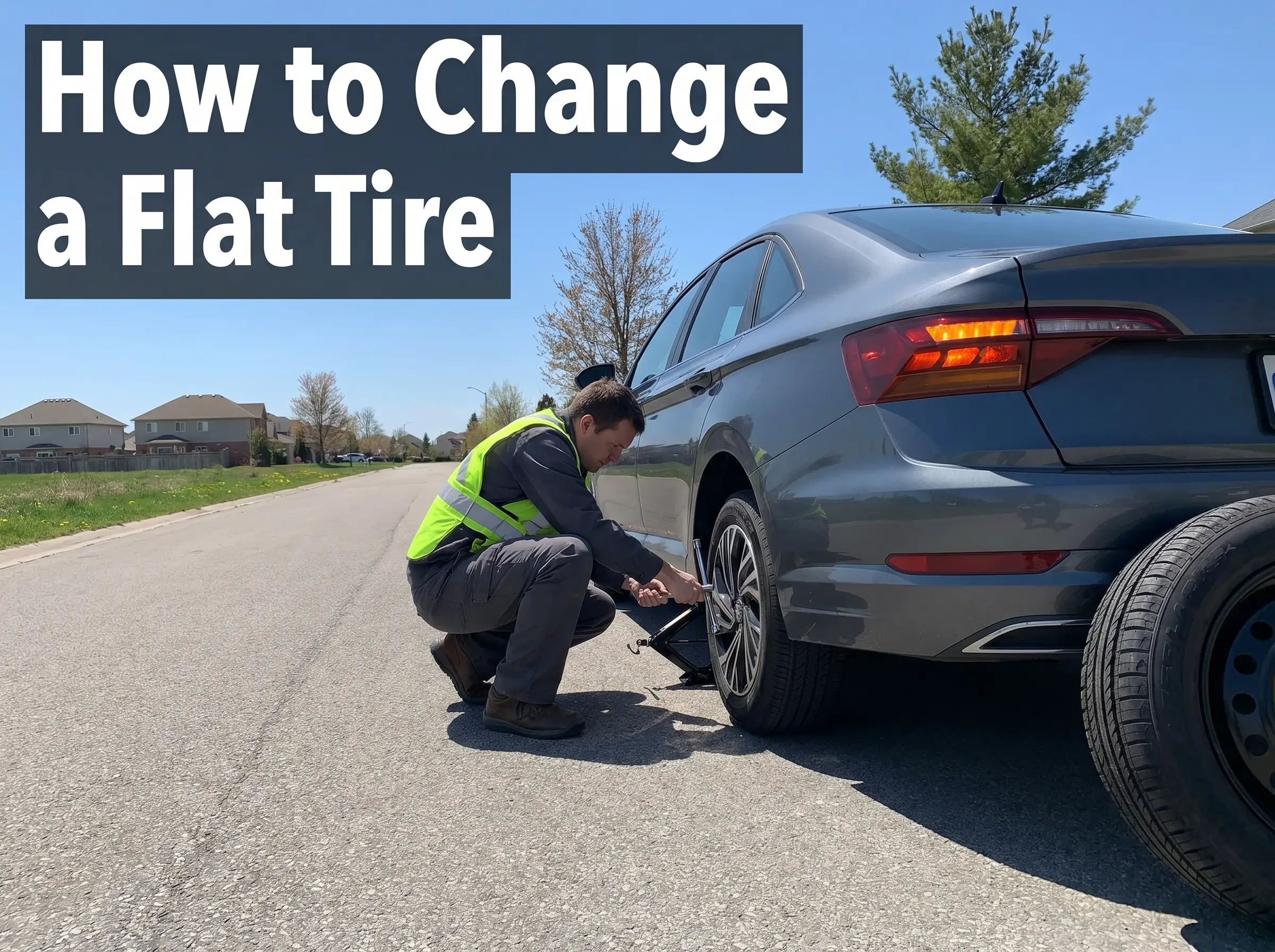
If you need how to change a flat tire on the side of the road, panic is the worst thing you can bring with you. This guide to how to change a flat tire shows you the safest way to handle it, what tools you need, and what mistakes to avoid so you can get back on the road with less stress.
Why knowing this skill matters
A flat tire can happen to anyone. It does not care if you are on your way to work, picking someone up, or driving home late at night.
The good news is that most people can handle a basic tire change if they stay calm and follow a clear process. The real skill is not strength. It is safety, order, and paying attention to small details.
The first thing most drivers get wrong
A lot of drivers rush straight to the wheel before they make the car secure. That is where trouble starts. Before you touch the tire, your goal is simple. Make the car stable. Make yourself visible. Make the job easy enough that you do not guess your way through it.
What you need before you start
You do not need a huge toolkit. But you do need the right basics. Most cars come with a spare tire, a jack, and a lug wrench. Some also have wheel wedges or a tire inflator kit. If your car is missing any of these, it is better to find that out at home than on a dark shoulder.
Check your spare tire first
A spare tire that is flat is not much help. If your car has a temporary spare or donut tire, check its pressure every few months.
A temporary spare is meant for short distances and lower speeds. It is not made for long highway driving, and it should never be treated like a full-size tire.
Find the jack point
Every car has specific lift points under the frame. If you lift the car in the wrong place, you can damage the body or make the car unstable. Your owner’s manual will show where the jack should go. That detail matters more than people think.
Step 1. Pull over in the safest place you can find
The best place is flat, solid, and away from traffic. A parking lot is ideal. A wide shoulder is better than a narrow one. If you are on a road with traffic, move as far from the lane as possible. Turn on your hazard lights right away. If it is dark or raining, slow down early and give yourself room to stop safely.
Step 2. Set the car so it cannot roll
Put the car in park if it is automatic. If it is a manual transmission, put it in first gear or reverse. Then set the parking brake fully. This is one of the easiest steps to skip, but it keeps the car steady while you work.
Use wheel wedges if you have them
Place wedges or heavy blocks behind the tires that will stay on the ground. If you are changing a rear tire, block the front wheels. If you are changing a front tire, block the rear wheels. That extra layer of security helps a lot on even a slight slope.
Step 3. Gather everything before lifting the car
Bring the spare tire, jack, and lug wrench to the wheel. Do not raise the car first and then go looking for tools. You should also keep gloves and a flashlight nearby if you have them. A bright light makes the job easier to control, especially after sunset.
Loosen the lug nuts before lifting
Use the lug wrench to turn each lug nut a little bit while the tire is still on the ground. Do not remove them yet. Just break them loose.
This is easier because the wheel is still supported by the car’s weight. Once the car is lifted, the wheel can spin if you try to loosen the nuts from scratch.
Step 4. Place the jack at the correct lift point
Slide the jack under the car and line it up with the proper lift point. Again, your owner’s manual should show the exact spot.
Raise the jack slowly until it starts to lift the car. Stop once the flat tire is just off the ground. You only need enough height to remove the wheel, not a dramatic lift.
Never put your body under a car held by a jack
A jack is for lifting. It is not the same thing as a full support system. That means you should keep your hands and body clear of areas that could trap you if something shifts.
Step 5. Remove the lug nuts and take off the flat tire
Now remove the loosened lug nuts the rest of the way. Keep them in a safe place where they will not roll away. Take the flat tire straight off the hub. It may feel stuck if it has been sitting there for a while, so a small shake can help free it.
Handle the wheel with control
Flat tires are heavier than most people expect. Hold the wheel with both hands and keep your balance while you pull it free. Set the tire aside flat on the ground. Do not leave it loose where it can roll into traffic or into your work area.
Step 6. Put the spare tire in place
Lift the spare and line it up with the wheel bolts. Slide it onto the hub until it sits flush. Start each lug nut by hand before tightening anything. That helps you avoid cross-threading the bolts, which can cause real problems later.
Tighten in a simple star pattern
Tighten the nuts a little at a time in a crisscross pattern. That keeps the wheel seated evenly. Do not fully crank one nut while the others stay loose. Even pressure across the wheel makes the installation safer and more secure.
Step 7. Lower the car and finish tightening
Lower the jack slowly until the spare tire touches the ground and supports the car. Then remove the jack. Now tighten the lug nuts firmly with the wrench. You want them snug and secure. You do not need to hang off the wrench with all your body weight.
Check the tire after the car is down
Once the car is fully on the ground, give the wheel a quick look. It should sit straight and even. If anything looks crooked or loose, stop and check it again before driving away.
Step 8. Put your tools away and inspect the flat tire
Pack the jack, wrench, and flat tire back into the car. Do not forget the wheel cover if your car uses one. Take a moment to look at the damaged tire. If the sidewall is shredded or the tread is badly torn, it may not be repairable.
Step 9. Drive carefully to the next stop
A spare tire is usually not meant for normal long-distance driving. Keep your speed down and avoid sudden turns or hard braking. If your car has a temporary spare, do not treat it like a regular tire. The spare is there to get you to a shop. That is its job.
Watch for warning signs on the road
If the car shakes, pulls to one side, or makes new noises, pull over and inspect the wheel. Something may be loose. It is better to stop once and check than to keep driving and make the problem worse.
Step 10. Get the tire fixed or replaced soon
A spare is a short-term solution. It buys you time, not a full repair. Go to a tire shop as soon as you can. They can tell you whether the flat can be patched or whether you need a replacement. If the tire damage came from a nail in the tread, a repair may be possible. If the damage is on the sidewall, replacement is more likely.
Why this matters after you learn how to change a flat tire
A lot of people stop after the wheel is on and think the job is done. It is not. The last part of how to change a flat tire is making sure you do not keep driving on a temporary fix longer than necessary. That is where many drivers run into avoidable trouble.
Common mistakes that make the job harder
Some mistakes are small. Some can be dangerous. One common mistake is forgetting to set the parking brake. Another is loosening the nuts after the car is already in the air. People also forget to check whether the spare tire is inflated before they need it.
Do not work in unsafe traffic conditions
If cars are flying past you and you do not have enough room to work, call for help. No tire change is worth risking your safety near fast traffic.
Do not use the wrong tools
A jack from another car may not fit yours. A wrench that slips can round off the lug nuts. When the tools are wrong, the job becomes much harder than it should be.
What to do if you do not have a spare
Not every car has a full spare anymore. Some come with a tire sealant kit or a small compressor instead. If that is what your car has, check the owner’s manual before using it. These kits are usually only meant for small punctures in the tread, not sidewall damage or large tears.
When a repair kit is not enough
If the tire is badly damaged or the wheel itself is bent, call roadside assistance. A repair kit will not solve every flat. That is also why learning how to change a flat tire is still useful even if you usually rely on service. Emergencies do not always happen where help is close by.
How to prepare before a flat ever happens
The easiest tire change is the one you are ready for. A little prep at home saves a lot of stress later. Check your spare tire pressure every couple of months. Make sure your lug wrench fits your car. Keep gloves, a flashlight, and a reflective triangle in the trunk if possible.
Practice the basics before you need them
You do not need to run through the whole process like a workshop drill. But it helps to know where the jack point is and where the tools are stored. That small bit of familiarity can save you time and confusion when the pressure is on.
FAQs
Q1. How long does it take to change a flat tire?
For most people, it takes about 15 to 30 minutes. If it is your first time or the wheel is stuck, it can take longer.
Q2. Can I drive on a spare tire for a long time?
No. A temporary spare is meant for short trips and lower speeds. Get the tire checked or replaced as soon as you can.
Q3. What if the lug nuts are too tight to remove?
Use steady pressure and make sure the wrench is fully seated. If they still will not move, do not force it in a way that might hurt you or damage the nuts. Roadside help may be the safer option.
Q4. Do I need to replace all four tires after one flat?
Not always. It depends on the tire wear, the type of damage, and whether the new tire matches the others. A tire shop can tell you what is safe for your car.
Q5. Is it safe to change a tire on the side of the highway?
Only if you have enough space away from traffic and can work safely. If the shoulder is narrow or cars are moving too fast near you, call for roadside assistance instead.
Conclusion
A flat tire does not have to turn into a full panic moment. If you stay calm, secure the car, and follow the steps in order, you can handle the job with a lot more confidence.
The biggest lessons are simple. Safety comes first. The spare is temporary. And the car should be checked soon after the wheel is changed.
The next step is easy. Check your spare tire and your jack today so you are ready before the next flat shows up.
