
Introduction
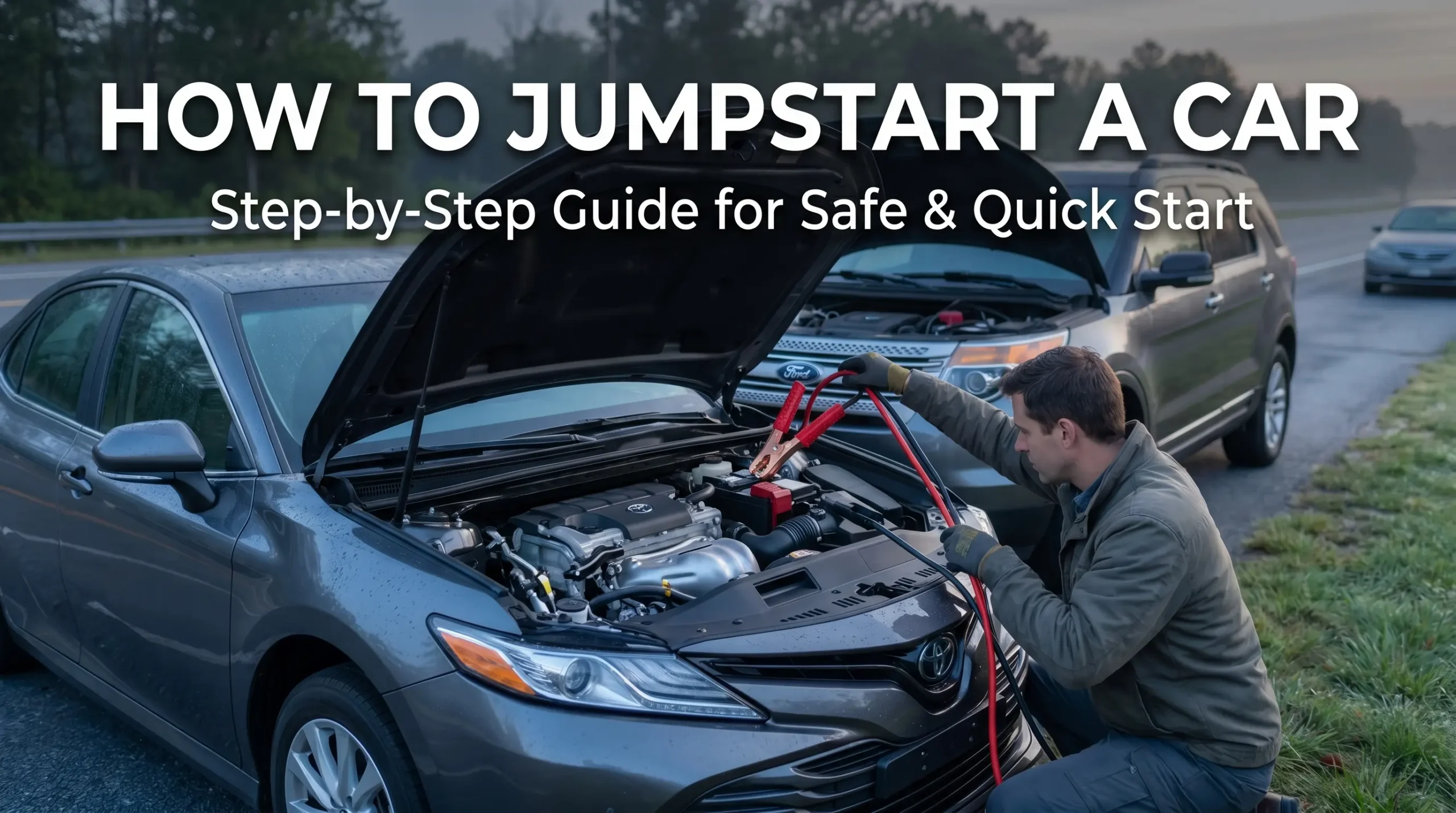
Your car won’t start, and you’re stuck. It happens fast, and in that moment, knowing how to jumpstart a car can save you from a long wait. This guide shows you exactly how to jumpstart a car the right way, without confusion or risk, so you can get back on the road in minutes.
Why Cars Fail to Start
A car that refuses to start usually points to one simple issue. The battery has lost its charge. Most batteries last around three to five years. But small habits can drain them much faster. Leaving headlights on overnight is one of the most common reasons. Cold weather also slows down battery power, which makes winter mornings tough for older batteries. And sometimes, it’s just bad timing. You park your car, everything seems fine, and then it doesn’t start the next day.
What You Need Before You Start
Before you try to jumpstart your car, make sure you have the right setup. Missing one item can delay the whole process.
Basic Equipment
You need a set of jumper cables and a working vehicle. That’s it. The cables should be in good condition, with no cracks or exposed wires. If you’ve had them sitting in your trunk for years, it’s worth checking them first.
Positioning the Vehicles
Park both cars close enough so the cables can reach, but do not let them touch. Keep both engines off before you begin. This small step prevents electrical issues.
Safety Rules You Should Never Ignore
Jumpstarting is simple, but it’s not something to rush through carelessly. Always check the battery for damage. If you see cracks or leaking fluid, stop right there. Do not attempt to jumpstart it. Keep your hands clear of moving parts. Engines can start suddenly. And make sure the cables never touch each other once connected. One mistake here can cause sparks.
Step by Step Process to Jumpstart a Car
Step 1 Connect the Positive Terminals
Take the red cable and connect it to the positive terminal of the dead battery. Then connect the other end to the positive terminal of the working battery. Look for the plus sign. That tells you it’s the right terminal.
Step 2 Connect the Negative Terminal
Now take the black cable and connect it to the negative terminal of the working battery. For the other end, attach it to a metal part of the dead car. Not the battery. This reduces the risk of sparks near the battery.
Step 3 Start the Working Car
Start the engine of the working vehicle. Let it run for two to three minutes. This allows power to flow into the dead battery slowly.
Step 4 Try Starting the Dead Car
Now go back and try to start your car. If it starts, let it run. Do not turn it off immediately. If it doesn’t, wait another minute and try again.
Step 5 Remove the Cables Carefully
Disconnect the cables in reverse order. Start by removing the black cable from the metal surface. Then remove it from the working battery. After that, remove the red cable from the working battery, and finally from your car. Take your time with this step. Rushing here leads to mistakes.
What to Do After Your Car Starts
Getting your car started is only half the job. Let your engine run for at least ten to fifteen minutes. This helps recharge the battery. If possible, take a short drive. Idling helps, but driving charges the battery more effectively. If your car struggles again later, your battery may be at the end of its life.
Common Mistakes People Make
Many people think jumpstarting is just connecting cables randomly. That’s where problems begin. Connecting cables in the wrong order is a big one. It can damage your car’s electrical system. Another mistake is turning off the car too soon after it starts. This doesn’t give the battery enough time to recover. And some people skip safety checks. That can turn a simple fix into a costly issue.
Can You Jumpstart Without Another Car
Yes, but you need a portable jump starter. These small devices hold enough power to start your car without needing another vehicle. They are easy to use and a good backup if you often travel alone. Still, the process of how to jumpstart a car stays mostly the same. You connect the device instead of another car.
When Jumpstarting Does Not Work
Sometimes, even after doing everything right, the car won’t start. This usually means the problem is not just the battery. It could be the starter motor or another electrical issue. If your car makes no sound at all, that’s a sign to get it checked by a professional.
FAQs
Q1. How long does it take to jumpstart a car?
It usually takes around five to ten minutes. Most of that time goes into letting the battery charge before starting the car.
Q2. Can jumpstarting damage my car?
It can, but only if done incorrectly. Following the correct steps keeps everything safe.
Q3. Do I need to replace my battery after jumpstarting?
Not always. But if your battery dies often, it’s a sign it needs replacement.
Q4. What happens if I connect cables wrong?
You can damage the battery or electrical system. In some cases, it can even cause sparks.
Q5. Can I jumpstart a completely dead battery?
Yes, but it may take longer. If it still doesn’t start, the battery may be beyond recovery.
Conclusion
Knowing how to jumpstart a car is one of those skills you don’t think about until you need it. But when the moment comes, it makes all the difference. Follow the steps carefully, stay patient, and focus on safety. That’s all it takes. Next time your car won’t start, you won’t panic. You’ll know exactly what to do.
