
Introduction
What salary is middle class UK is a question many people ask because the answer is not as simple as one fixed number. A salary can look good on paper and still feel tight once rent bills food and travel are paid. It can also feel very different for a single person a couple or a family with children.
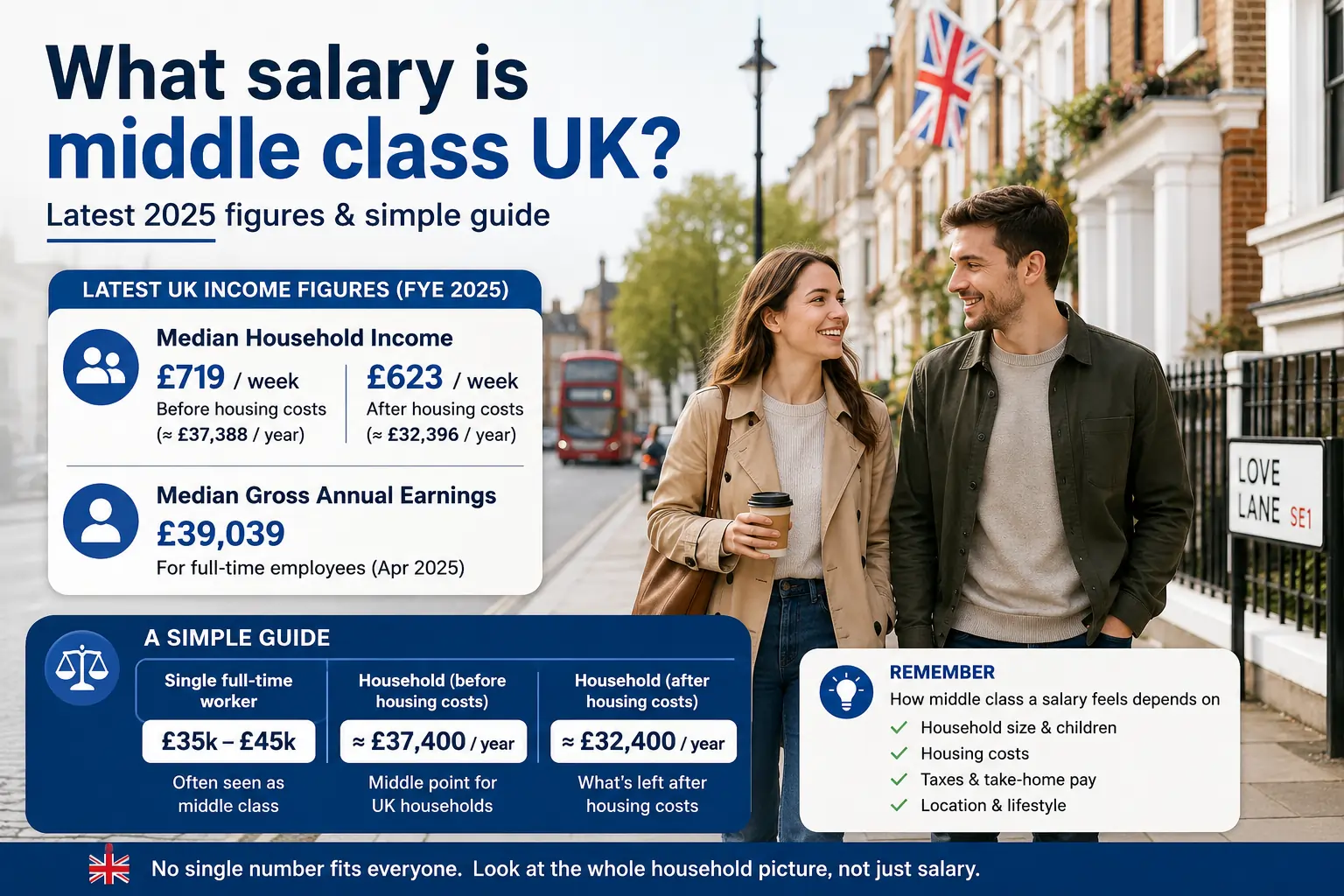
The latest official figures show why this topic is confusing. In FYE 2025 the UK median household income was £719 a week before housing costs and £623 a week after housing costs. That is about £37,388 a year before housing costs and £32,396 a year after housing costs. ONS also reported median gross annual earnings of £39,039 for full time employees in April 2025. In simple terms that means what salary is middle class UK depends on whether you mean one worker or an entire household. This guide breaks it down in easy English and shows what the numbers really mean.
What Salary Is Middle Class UK
There is no single official middle class salary in the UK. That is the first thing to understand. People and researchers usually look at median income instead because the median shows the middle point of the income range. The Institute for Fiscal Studies says median income is the point where half of people are below it and half are above it. It also notes that household income is usually measured after tax and adjusted for household size.
So a practical answer to what salary is middle class UK is this. For one full time worker a salary around the national median of about £39,000 a year is a sensible middle point. For a household the middle point is closer to £37,400 a year before housing costs or about £32,400 after housing costs based on the latest official household figures. That is why many people place middle class income somewhere around the high £30,000s to low £40,000s for a single earner. For a family the number can be higher.
Why There Is No Single Number
The phrase middle class sounds neat but real life is not neat. A salary that feels comfortable for one adult can feel very different for a parent with two children. A worker in a low cost area can live well on less than someone in an expensive city. Housing costs also change the picture a lot. That is why official reports often show income before housing costs and after housing costs.
Household size matters too. A household income is not the same thing as one person’s salary. The same income has to cover more people when a home has children or other dependants. The IFS explains that income is measured in an equivalised way so different household sizes can be compared more fairly. That is one big reason what salary is middle class UK does not have one clean answer.
A Simple Way To Think About Middle Class Income
A simple way to look at it is to think in bands instead of one exact figure. A salary near the UK median is often seen as middle class. A salary well below the median may feel more like working class. A salary far above the median is usually seen as upper middle class or higher depending on the household.
For a single full time worker a salary around £35,000 to £45,000 is often a fair middle class reference point. That is not an official rule. It is a practical estimate based on the latest median full time earnings and the latest household income figures. Some people will feel middle class below that range. Others will not feel middle class even above it because of rent loans childcare or location.
What Changes How Middle Class Feels
Household size and children
The more people a salary has to support the more pressure it faces. A single adult can usually stretch the same income further than a couple with children. That is why a household can look middle class in one situation and tight in another even when the income is the same. Official income measures try to adjust for this with equivalised household income.
Housing costs
Housing is one of the biggest reasons people disagree on what salary is middle class UK. A salary that works in a cheaper town may not work in a high rent city. The official UK income statistics therefore show figures both before housing costs and after housing costs so readers can see the difference. That is a strong hint that housing costs can change how middle class a salary feels in real life.
Taxes and take home pay
Gross salary is not the money you spend. Tax and National Insurance reduce it first. That is why two people on the same gross pay can still feel different if they have different household costs. Median gross annual earnings for full time employees were £39,039 in April 2025. That is a useful benchmark but it is still only part of the picture.
Region and lifestyle
A salary also feels different based on lifestyle. Some people travel a lot and spend more on transport. Some pay for childcare. Some live alone. Others support parents or children. So the same figure can feel comfortable to one family and tight to another. That is why what salary is middle class UK should always be read as a guide and not a strict rule.
Real Life Examples
A single worker earning about £39,000 a year sits close to the UK full time median. That would usually be seen as middle class by many people because it is near the center of the pay scale.
A couple earning a combined £60,000 a year may also feel middle class. That income is above the single worker median but the household still has to think about rent bills savings and family needs. The exact feeling depends on where they live and how many people they support. This is why the same answer does not fit every home.
A family with children may need more than a single person to feel secure. Even a salary that sounds strong can disappear fast after housing and childcare costs. This is one reason many readers search what salary is middle class UK and still feel unsure after seeing one number. The real answer is always tied to household life.
Is Salary The Same As Middle Class
No. Salary is only one part of the story. Middle class usually refers to living standard not just pay. Two people can earn the same salary and live very different lives because one may own a home and the other may rent. One may have no children and the other may support a family. That is why what salary is middle class UK should be answered with both salary and household context.
The Best Practical Answer
If you want one simple answer then this is the closest honest version. In the UK a middle class salary is often around the median level. For one full time worker that is near £39,000 a year. For households a middle point is roughly £37,400 a year before housing costs or £32,400 after housing costs based on the latest official data. It is a useful guide but not a strict label.
Conclusion
So what salary is middle class UK? There is no single official number. The clearest guide is the middle of the income range. For a full time worker that is around £39,000 a year. For a household the middle sits around the high £30,000s before housing costs and the low £30,000s after housing costs. The final answer still depends on family size rent childcare savings and where you live. If you are writing or reading about middle class income in the UK always look at the household picture and not salary alone. That is the most honest way to understand the numbers.
FAQ’s
Q1. Is £40k middle class in the UK?
Yes in many cases it is a fair middle class benchmark for one full time worker because it sits close to the latest median full time earnings of £39,039. For a household it may still feel tight or comfortable depending on costs.
Q2. Is £30k middle class in the UK?
For one worker £30k is below the latest full time median pay. That does not make it low income by itself but it is usually below the clearest middle point used in UK income data.
Q3. Is £50k middle class in the UK?
Yes many people would see £50k as middle class or upper middle class for a single worker. It is above the full time median and above the household median benchmark too. Even then housing and family size can change how far the money goes.
Q4. Does location change what middle class means?
Yes. A salary can feel very different in a high rent area compared with a cheaper town. Official UK income figures separate incomes before housing costs and after housing costs for this reason.
Q5. Is middle class based on salary or household income?
Household income is the better measure in most UK research. Salary only shows one person’s pay while household income shows the full money coming into a home. The IFS uses equivalised household income so different household sizes can be compared more fairly.
