
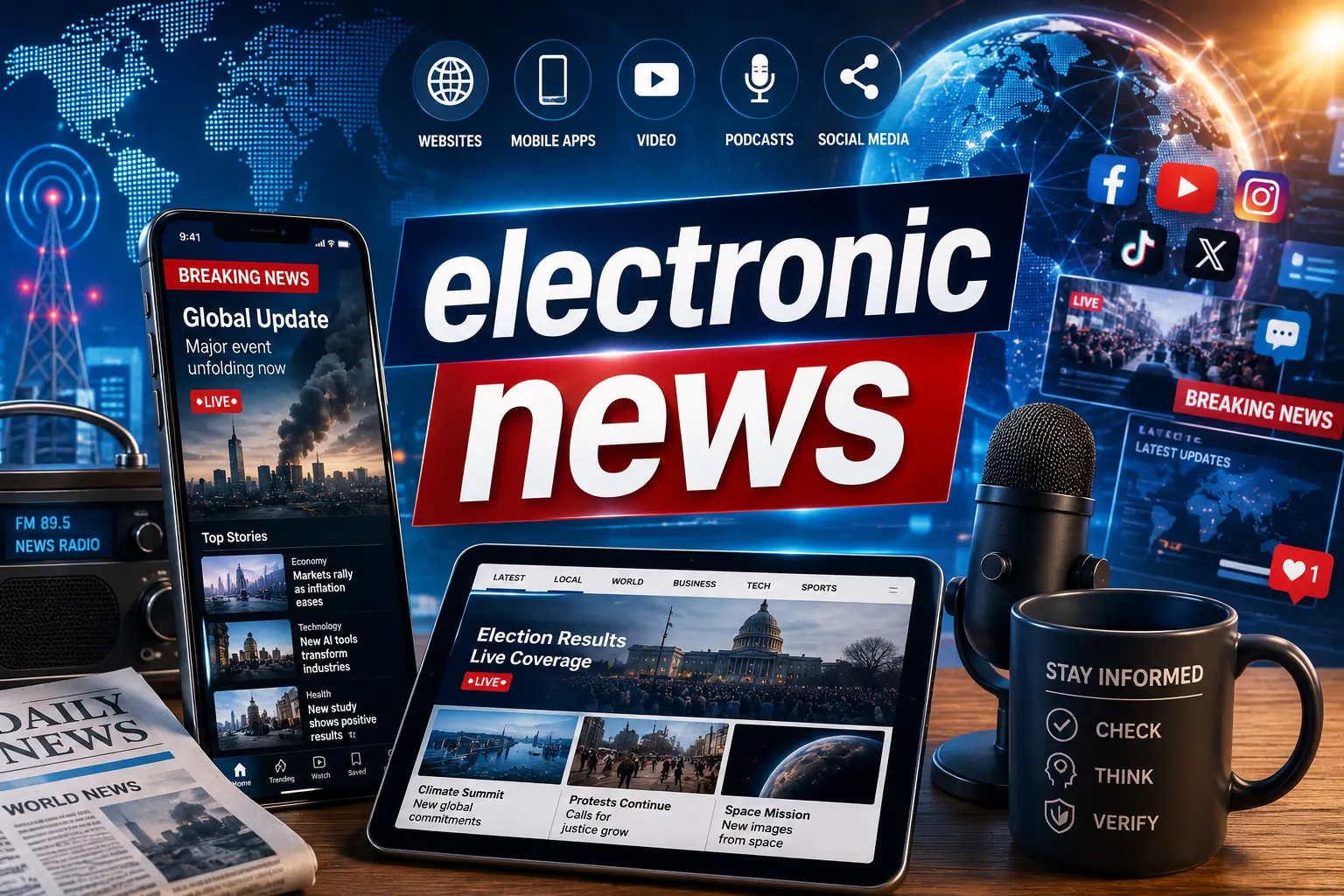
Have you noticed how fast news reaches your phone now. One alert can tell you about a big event before you even open a TV or newspaper. That is the power of electronic news. It has changed how people read watch and share news every day.
Today news is no longer limited to paper or one fixed time. It moves through websites apps podcasts social media radio and video. In this article you will learn what electronic news is how it works why it matters and how to use it in a smart way. The goal is simple. By the end you will understand the full picture in easy English.
What Electronic News Means
Electronic news is news shared through digital and electronic tools. This includes news websites mobile apps webcasts podcasts social media radio television and online video platforms. In simple words it is news that reaches people through screens speakers and internet connected devices instead of only through printed paper. Journalism today covers both print and electronic media and the line between them has become very thin. Many newspapers now also publish online versions so the same story can be read on paper or on a phone.
One big reason electronic news became so important is the internet. New media grew from internet based communication and digital technology. That shift changed the old one way style of news into a more active system where people can comment share react and even send news tips back to newsrooms. In other words electronic news does not only speak to the audience. It also listens to the audience.
Why Electronic News Became So Popular
People like electronic news because it is fast. A story can break in the morning and reach millions within minutes. It is also easy to carry because most people already have a phone in their pocket. That means news is available almost anytime and almost anywhere. News has also become more personal. People can follow the topics they care about most such as business sports health technology or politics. Digital platforms make that easy.
Another reason for the growth of electronic news is the way people now consume video. The Reuters Institute reported that across its covered markets social video news grew from 52% in 2020 to 65% in 2025 and any video news grew from 67% to 75%. That means more people are choosing to watch the news instead of only reading it. Short clips live streams and personality led news creators are becoming a bigger part of the news habit.
Social platforms also play a major role. Pew Research Center found that many U.S. adults regularly get news on Facebook and YouTube and smaller but still important shares get news on Instagram TikTok and X. Pew also found that TikTok users who get news there rose sharply compared with earlier years. This shows that electronic news is no longer just about news websites. It now lives inside the apps people already use every day.
How Electronic News Works
The process behind electronic news is simple to understand. A reporter gathers the facts. An editor checks the story. A newsroom publishes it on a website app social platform or broadcast channel. Then the audience sees it almost immediately. The same story may appear as text video audio or a social post. This flexibility is one of the strongest points of electronic news because one story can fit many formats.
Electronic news also works through constant updates. A story can be changed as new facts appear. That is useful during breaking events. It can also help people stay informed during elections disasters health alerts and big public events. But this speed also creates pressure. Newsrooms must balance fast reporting with careful checking. The Reuters Institute notes that trust and engagement remain problems for traditional news media in many places. That means speed alone is not enough. Accuracy still matters most.
Benefits of Electronic News
The first benefit of electronic news is speed. The second is reach. A local story can become global very quickly. A third benefit is access. People with an internet connection can often find more stories than they would ever see in print. Electronic news also gives room for pictures video charts live updates and user comments. That can make a story easier to understand.
Another benefit is choice. Readers can decide what to open what to skip and what to save for later. They can follow a topic from many sources and compare reports. Electronic news also helps smaller creators and independent journalists reach audiences without waiting for a large print system. This is one reason digital media changed journalism so deeply. It opened the door for more voices and more formats.
A practical benefit is speed during urgent events. When there is a storm a public warning a market crash or a major political event electronic news can spread quickly and help people respond sooner. That instant reach is one of the strongest reasons people rely on phones and social platforms for news today.
Problems People Face With Electronic News
Even with many benefits electronic news has serious problems. One major issue is misinformation. When news spreads quickly bad information can also spread quickly. Another issue is attention pressure. Some platforms reward short exciting content more than careful reporting. That can push news toward speed and emotion instead of depth. Britannica notes that journalism in the internet age came under economic pressure and also came under scrutiny as misinformation spread.
Trust is another big problem. Reuters Institute reported that traditional news media are struggling to connect with much of the public and that engagement trust and digital subscriptions are under pressure. This matters because a news system only works well when people believe it enough to read it with care. If readers lose trust they may stop checking reliable sources and rely only on posts that confirm what they already think.
There is also the problem of overload. People can see too many headlines in one day. This can make news feel noisy and confusing. Instead of helping people understand the world the flood of content can make them ignore important stories. That is why electronic news needs good editing clear headlines and responsible reporting.
How to Read Electronic News Wisely
If you use electronic news every day a few simple habits can help a lot. First check the source. Look for the name of the publisher and see if it is known for real reporting. Second compare more than one report before you believe a big claim. Third be careful with headlines that feel too shocking or too perfect. Fourth try to read the full story not only the preview text. These habits protect you from quick mistakes and false news.
It also helps to separate news from opinion. Some electronic news content is reporting. Some is commentary. Some is entertainment. They can look similar on a screen but they are not the same thing. When you know the difference you can judge the content better. Social media makes this even more important because many people now get news inside the same apps where they also see jokes trends and personal posts.
Electronic News and the Future
The future of electronic news looks even more digital. Video will likely keep growing. Mobile use will stay strong. Social platforms will continue to shape what many people see first. Newsrooms will also keep testing new formats such as live video short clips audio briefings and interactive explainers. The big challenge will be to stay clear trustworthy and useful while moving at internet speed.
At the same time readers will have more power than before. They can follow sources they trust and ignore sources that waste their time. They can choose deeper reporting instead of only fast headlines. In that way electronic news is not only a technology change. It is also a habit change. It asks both the news maker and the reader to be more careful.
Conclusion
Electronic news has changed the way the world learns about events. It is fast easy to access and available in many forms like text video audio and social posts. It also brings real risks such as misinformation overload and low trust. So the smartest way to use electronic news is to stay curious but careful. Follow trusted sources compare reports and read beyond the headline. If you do that electronic news can become a powerful tool that keeps you informed every day.
FAQ’s
Q1. What is electronic news?
Electronic news is news shared through digital and electronic channels such as websites apps social media radio television podcasts and video platforms. It is news that reaches people through screens and internet connected devices.
Q2. Why is electronic news important?
It is important because it spreads information fast and reaches large audiences quickly. It also lets people get news in the format they like most such as video audio or text.
Q3. Is electronic news better than print news?
It is not always better. It is faster and easier to access but it can also spread mistakes faster. Print can still feel more focused while electronic news gives speed and flexibility. The best choice depends on what the reader needs.
Q4. What are the main risks of electronic news?
The main risks are misinformation overload weak trust and poor source checking. Social platforms can also mix news with opinion and entertainment which can confuse readers.
Q5. How can I trust electronic news?
Check the source read more than one report and look for clear facts instead of dramatic language. Trusted news usually shows names dates evidence and context. Good reading habits matter as much as good reporting.
