
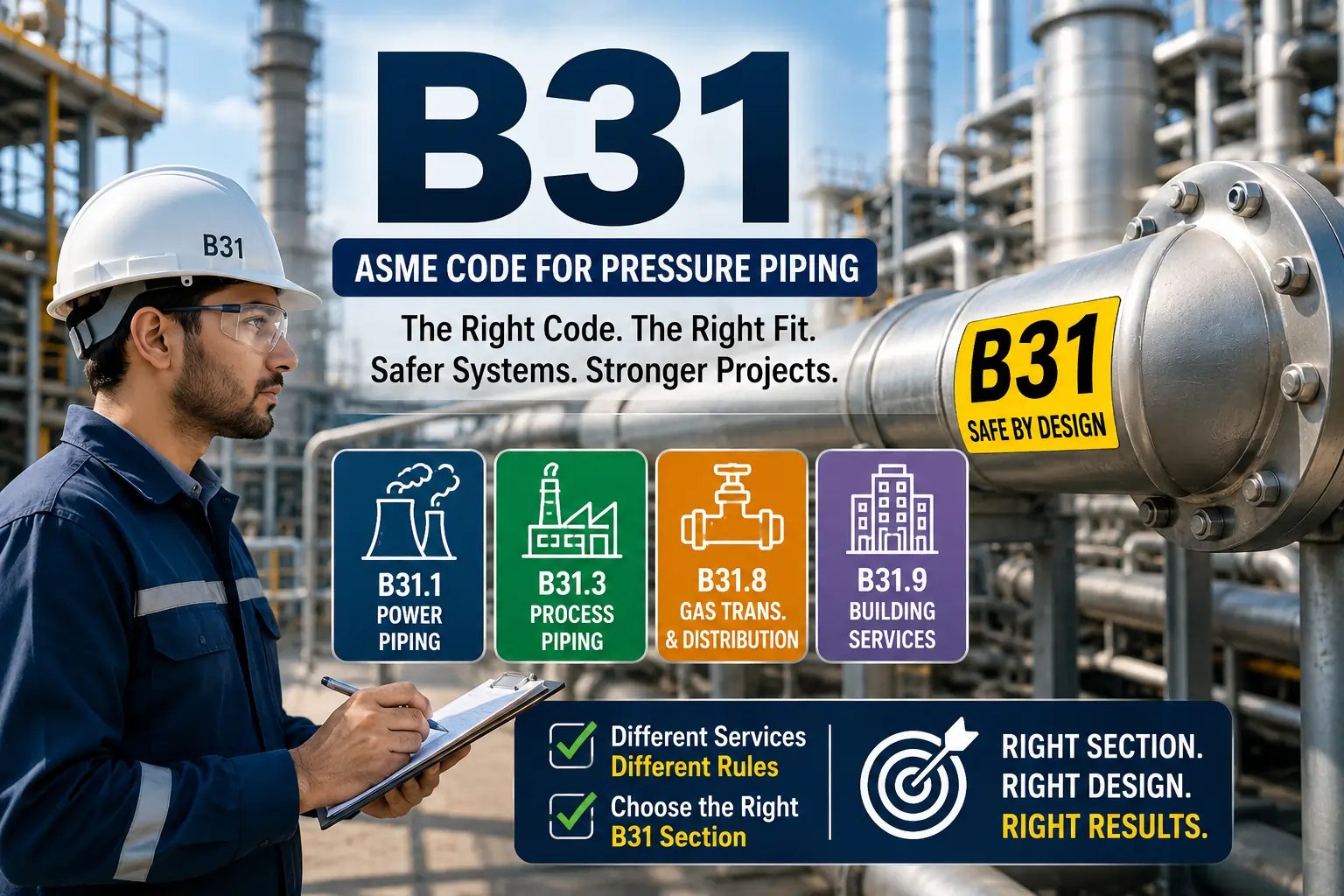
B31 is a family of piping codes. It is not just one rule. It helps people design safer piping systems for power plants process plants building services and gas networks. If you searched for B31 you probably want a simple answer and not a wall of technical terms. This guide gives you that answer.
You will learn what B31 means how the main sections differ where each one is used and how to avoid common mistakes when reading or applying the code. The focus keyword B31 appears here because it is the main term readers search for when they need a fast clear explanation. That is exactly what this article gives you.
What B31 means
B31 is the name of the ASME Code for Pressure Piping family. The code family covers different kinds of piping used in different industries. Some sections focus on power piping. Some focus on process piping. Others focus on gas systems and building services. The point is simple. One piping project does not fit every rule. B31 gives each type of project its own set of requirements so the system can be designed and built more safely.
That is why B31 matters to engineers fabricators inspectors and project owners. It helps them match the code to the real job. A steam line in a power plant is not the same as piping in a school. A chemical plant loop is not the same as a district heating line. B31 exists because those differences matter in design and in service life.
Why people search for B31
Most people do not search for B31 because they love code numbers. They search for it because they need to know one of three things. What does B31 mean. Which section applies to my project.
And how strict are the rules. That search intent is practical. People want to avoid mistakes that can cost time money or safety. The good news is that B31 is easier to understand once you break it into sections.
The 4 B31 sections readers should know
The easiest way to understand B31 is to look at the sections one by one. Each section serves a different type of piping work. That is the part many readers miss when they first look up B31. Once you know the section you can quickly narrow the rules you need.
B31.1 Power piping
B31.1 is used for power piping. ASME says it covers piping systems found in electric power generating stations industrial plants geothermal heating systems and central and district heating and cooling systems. It also sets minimum requirements for design materials fabrication erection test examination inspection operation and maintenance. ASME also notes that B31.1 tends to be more conservative than other B31 sections because power systems often need long service life and high reliability.
A simple way to think about B31.1 is this. It is the section that fits power related piping work where dependable long term performance matters a lot. If a system carries steam hot water or other energy related service in a power setting then B31.1 is often the section people check first.
B31.3 Process piping
B31.3 is the section many people mean when they talk about plant piping. ASME says it covers process piping in petroleum refineries chemical plants pharmaceutical plants hydrogen service paper and pulp power generation semiconductor and cryogenic plants plus related processing plants and terminals. It covers materials and components design fabrication assembly erection examination inspection and testing. ASME also says the code sets engineering requirements needed for safe design and construction.
This is the section that often matters in industrial projects. If the piping supports a process line rather than a general building utility then B31.3 is usually the code people study. The scope is wide because process plants use many fluids and many operating conditions. That wide scope is one reason B31.3 gets so much search traffic.
B31.8 Gas transmission and distribution
B31.8 covers gas transmission and distribution piping systems. ASME says it covers the design fabrication installation inspection and testing of pipeline facilities used in the transportation of gas. That makes it very different from the process piping and building services sections. The service type is the key clue here. When gas movement is the main purpose this section is one of the first places to look.
For readers this means one thing. Do not assume every gas related project belongs in the same bucket as power piping or process piping. The operating context matters. B31.8 exists because gas transmission and distribution need their own rules.
B31.9 Building services piping
B31.9 covers piping in industrial institutional commercial and public buildings and multi unit residences. ASME says it prescribes requirements for design materials fabrication installation inspection examination and testing of building services piping. It also notes that this section does not require the same range of sizes pressures and temperatures covered in B31.1.
This section matters for everyday building systems. Think of heating cooling and utility piping inside or within the property limits of a building. If the project is part of a building service instead of a process plant then B31.9 is often the more relevant section.
How to choose the right B31 section
The right section usually depends on the service. Start with the industry. Then check what the piping does. Then look at the operating conditions and the location. Is it part of a power system. Is it a process line. Is it gas transmission. Is it building service piping. Those questions help narrow the choice fast.
A practical rule helps here. Do not pick a code section just because it sounds familiar. Pick it because the project scope fits it. That one habit can save a lot of trouble during design review fabrication and inspection. It also makes it easier to explain your choice to a client or project manager.
Here is a simple example. A steam line in a power station points you toward B31.1. A chemical transfer line points you toward B31.3. A building hot water loop points you toward B31.9. A gas distribution line points you toward B31.8. That is the kind of quick thinking that makes the code easier to use in real work.
Common mistakes people make with B31
One common mistake is treating B31 like a single rule with one meaning. It is not. B31 is a family and each section has its own job. When people ignore that they may apply the wrong requirements to the wrong system. That can lead to confusion during design and inspection.
Another mistake is mixing up power piping and process piping. The two can look similar at first glance but their code paths are not the same. B31.1 is aimed at power related piping and B31.3 is aimed at process piping. That difference matters because the design basis and the service expectations are not identical.
A third mistake is assuming building piping belongs in the same group as industrial process piping. B31.9 is built for building services. It serves a different kind of project than B31.3 or B31.1. A careful scope check at the start can prevent a lot of rework later.
A fourth mistake is skipping the service details. Pressure alone is not enough. Temperature location fluid type and system purpose all matter. B31 sections were created because those details change the way piping should be designed and tested.
Why B31 is worth understanding
Even if you are not a piping engineer B31 is worth learning at a basic level. It helps you speak the same language as designers inspectors and contractors. It also helps you ask better questions before work starts. That is often where the real value sits. A little code awareness can prevent a lot of misunderstanding later.
For guest post readers this is the main takeaway. B31 is about fit. The right section fits the right service. That simple idea is behind safe piping decisions in power plants process plants buildings and gas systems. Once you understand that idea the code family feels much less intimidating.
FAQ’s
Q1. What is B31 in simple words?
B31 is a family of ASME piping codes. It gives different rules for different kinds of piping work such as power piping process piping gas piping and building services piping.
Q2. Is B31 one code or many codes?
It is many codes inside one family. B31.1 B31.3 B31.8 and B31.9 are examples of separate sections with different scopes and uses.
Q3. Which B31 section is used for process piping?
B31.3 is the section for process piping. ASME says it covers industries such as petroleum chemical pharmaceutical hydrogen paper and pulp power generation semiconductor and cryogenic plants.
Q4. Which B31 section is used for building piping?
B31.9 is the section for building services piping. ASME says it applies to industrial institutional commercial and public buildings plus multi unit residences.
Q5. Why is B31.1 different from B31.3?
B31.1 is for power piping. B31.3 is for process piping. ASME says B31.1 tends to be more conservative and is aimed at power systems where long service life and reliability are important.
Conclusion
B31 is easier to understand once you stop thinking of it as one rule. It is a family of piping codes for different kinds of work. B31.1 supports power piping. B31.3 supports process piping. B31.8 supports gas transmission and distribution. B31.9 supports building services piping. When you match the section to the real project the code becomes much more useful and much less confusing. That is the real value of understanding B31.
