
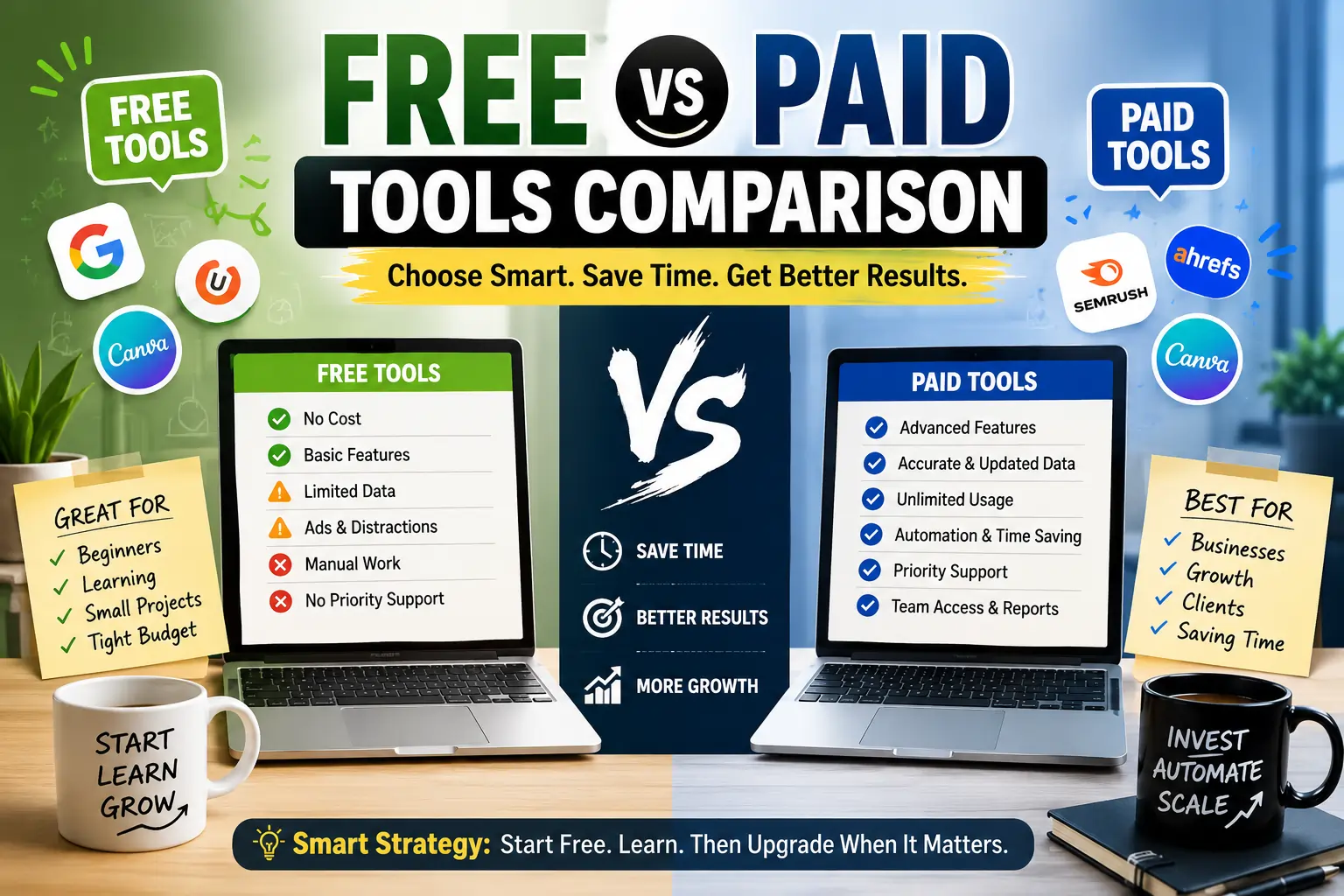
Free tools draw you in with zero upfront costs, making them incredibly appealing at first glance. Yet, hidden drawbacks often emerge—hours wasted on manual tasks, the hassle of juggling multiple apps, or missed opportunities from limited data access.Choosing between free and paid tools can feel confusing. Many people start free. Later they wonder if paying will give better results. The truth is simple. It depends on your goals.
Some users only need basic work. Others need speed and deeper data. That is where this Free vs paid tools comparison becomes important.
What are free tools?
Free tools are platforms or software you can use without paying money. Many offer limited features. Some give full access with ads. Others keep premium features locked.
Examples include free SEO tools. Free design apps. Free writing tools. They are best for beginners. Students. Bloggers. Side projects.
What are paid tools?
Paid tools require a monthly or yearly payment. In return they often give better features. More storage. Faster support. Better reports. Automation.
Businesses usually choose paid tools because time matters. Results matter. Teamwork matters. That is why many professionals move after comparing free vs. paid tools.
Main difference between free and paid tools
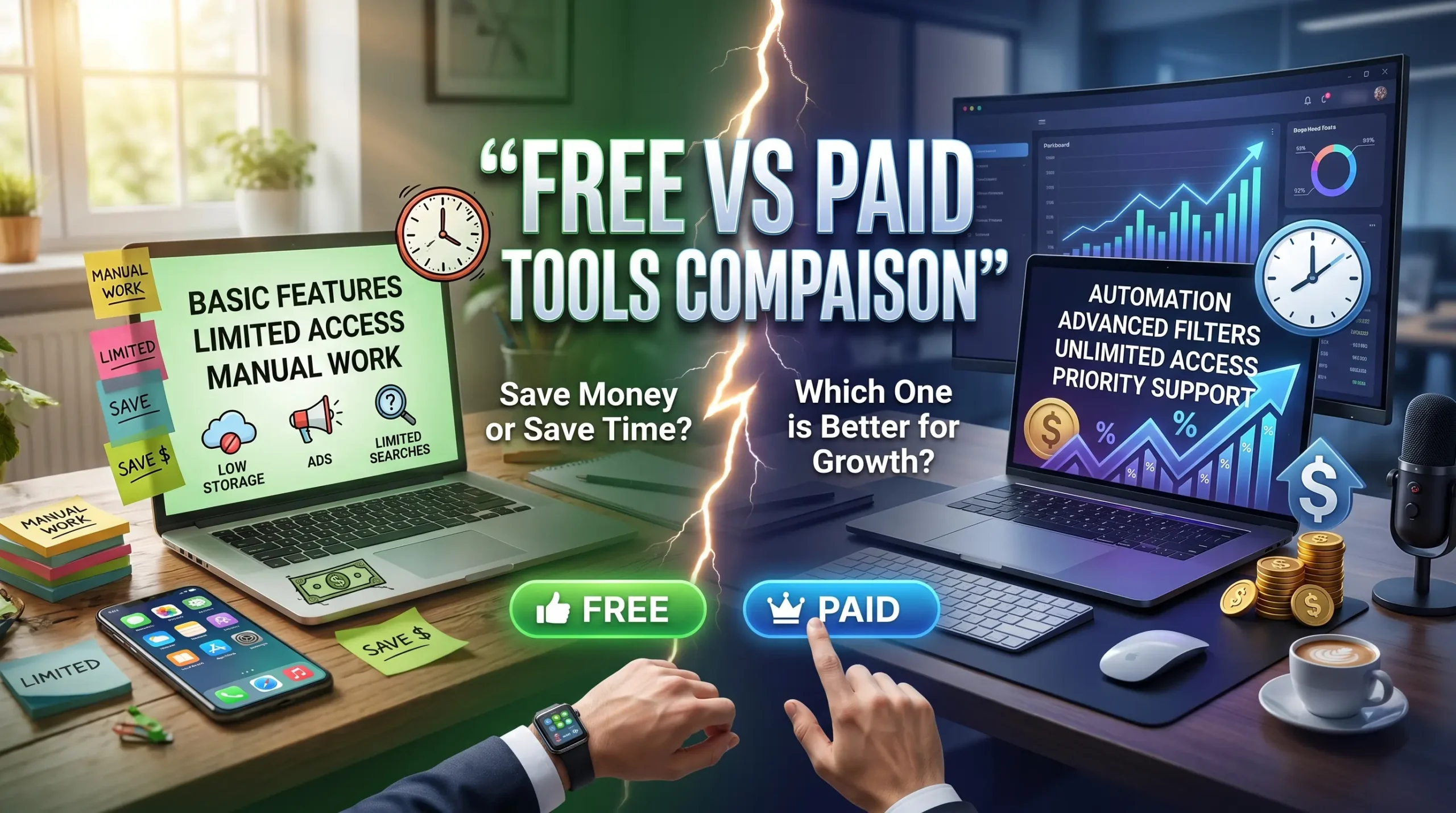
The biggest difference is value. Free tools save money. Paid tools save time.
Free tools may need extra manual work. Paid tools often do that work for you.
Free tools are good for learning. Paid tools are good for scaling.
Cost comparison
Free tools draw you in with zero upfront costs, making them incredibly appealing at first glance. Yet, hidden drawbacks often emerge from hours wasted on manual tasks, the hassle of juggling multiple apps, or missed opportunities from limited data access.
Paid tools cost money each month. Yet they can increase speed and profit if used correctly. So in a smart Free vs paid tools comparison cost should include both money and time.
Features comparison
Free tools usually offer.
- Basic dashboards
- Limited searches
- Small exports
- Few templates
- Low storage
Paid tools usually offer
- Full dashboards
- Unlimited use
- Advanced filters
- Automation
- Priority support
- Team access
If features help your work then paying can be worth it.
Accuracy and data quality
Many free tools give estimated numbers. Some data can be old or simplified. Paid tools often update data faster and provide more detail. Premium SEO suites are known for broader keyword and competitor data than most free options
If your decisions depend on exact numbers then this part of the Free vs paid tools comparison matters a lot.
Ease of use
Some free tools are simple. That is great for beginners. Some paid tools are also easy. But advanced dashboards may need learning time. The best tool is not always the most expensive one. It is the one you can use daily.
Support comparison
Free tools often rely on help centers or community forums. Paid tools usually offer email support. Live chat. Faster responses. Training resources. If your business depends on the tool then support becomes valuable.
Security and reliability
Free tools may have fewer guarantees. Some depend on ads or third party funding. Paid tools often invest more in uptime and account protection. For client work or company data this can be important.
Who should choose free tools?
Choose free tools if you are.
- New to online work
- Testing ideas
- Running a small blog
- Learning SEO
- On a tight budget
- Using tools casually
Many users can grow for months with only free tools.
Google free SEO tools are often recommended as a strong starting point for site owners
Who should choose paid tools?
Choose paid tools if you are.
- Running a business
- Managing clients
- Growing traffic fast
- Needing reports
- Working with a team
- Saving time daily
When work creates income then paid tools can become an investment.
Best strategy for smart users
Use both. Start free. Learn basics. Understand what you need. Then upgrade only when limits slow you down. This is often the smartest result of any Free vs paid tools comparison.
Common mistakes people make
Many people buy expensive tools too early. Others stay free too long and waste time. Do not choose by hype. Choose by need.
Ask simple questions.
- Does this tool save time?
- Does it help earn money?
- Does it improve quality?
- Will I use it weekly?
If yes then paid may be smart.
Final verdict
There is no single winner in this Free vs paid tools comparison. Free tools are perfect for starting. Paid tools are powerful for growth. If money is low then start free with confidence.
If growth matters and time is valuable then paid tools often win. Choose based on your current stage. Not someone else’s stage.
FAQ
Q1. Are free tools enough for beginners?
Yes. Many beginners can learn and grow with free tools first.
Q2. Are paid tools always better?
Not always. Better depends on your goals and use case.
Q3. When should I upgrade to paid tools?
Upgrade when free limits slow your progress or cost too much time.
Q4. Can I use free and paid tools together?
Yes. Many smart users combine both for best value.
Q5. Which wins in Free vs paid tools comparison?
Free wins for the budget. Paid wins for scale and speed.
Conclusion
The right choice in this Free vs paid tools comparison depends on your needs today. Free tools are great for learning and starting. Paid tools are better for speed growth and deeper results. If you are new then begin free. If your work needs better output then move to paid tools. Choose the option that gives real value for your time and goals.
