
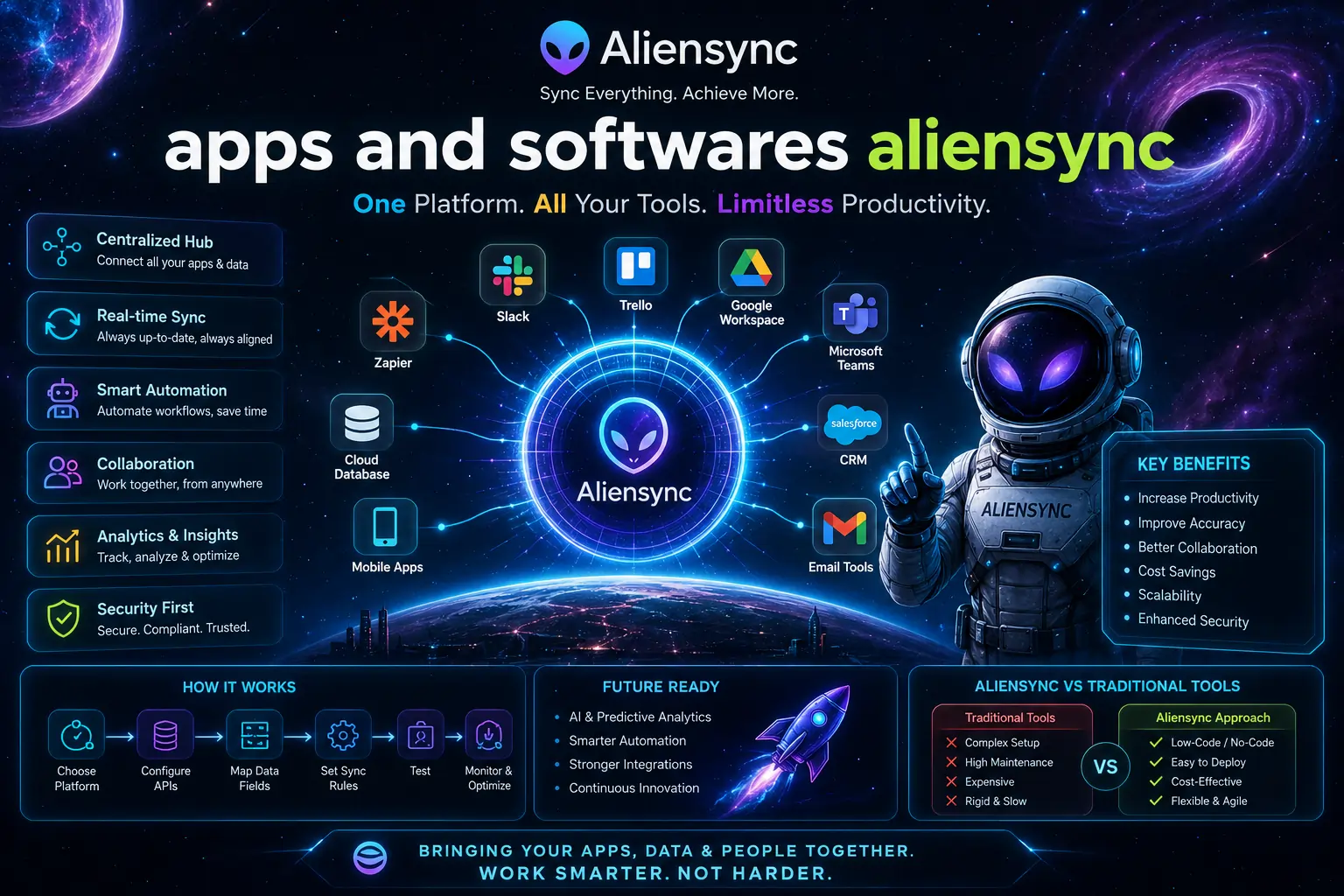
When I look at Aliensync as an innovative suite of apps and software. It feels built for real multitasking and everyday productivity rather than empty hype. Because the whole platform is designed to streamline workflows. Enhance collaboration, and make juggling tasks less of a frustrating problem for any team that is managing too much at once, in the digital haystack of modern work. This alien technology almost feels like an extraterrestrial encounters style jump into a more fascinating universe.
Where the world stops being the norm and starts searching for the right needle, and that is exactly where workflow, workflows, collaboration, productivity, data, task, pending, synchronization, and software. And suite apps come together to solve the problem more smartly, because I have seen how two different systems can keep showing the same work as pending. Until it is clearly marked done, and in 2026 it became even more obvious to me that this kind of alien technology was built for people who need one software tool that keeps everything moving instead of slowing it down.
Apps and Softwares Aliensync
From my own experience with apps and softwares, Aliensync works best when it acts as a centralized hub that brings disparate systems together instead of letting users and teams juggle applications across different devices and platforms. In practi,ce it feels like a multifaceted platform and a revolutionary tool that helps projects, workflow, deadlines, access, and synchronized tasks stay harmonized in one centralized hub so people can keep track without switching endlessly.
That kind of productivity tool becomes an invaluable asset for individuals and smart digital tools because it connects data, platforms, apps, softwares, applications, and workflows in a way that bridge the gap between scattered tools and real day to day work. I have seen how an AlienSync-type systems setup can communicates like a translator in the same language using a clear concept, framework, and standard so modern software can syncing with CRM, email tool, mobile app, and cloud database while connecting everything with less mess before it happen.
Key Features of Aliensync
From my own experience, Aliensync works best when it serves as a centralized hub that brings disparate systems together instead of leaving users and teams to juggle applications across different devices and platforms; in that setup, it feels like a multifaceted platform and even a revolutionary tool because projects, workflow, deadlines, access, and synchronized tasks stay harmonized in one place, making it easier to stay on top of everything without constant switching.
That is why I see it as an invaluable asset for individuals and smart digital tools alike, since it connects data, platforms, apps, softwares, applications, and workflows in a way that bridge the gap between scattered tools and real day to day work; in practical terms, an AlienSync-type systems setup communicates like a translator in the same language, using a clear concept, framework, and standard so modern software can syncing with CRM, email tool, mobile app, and cloud database while connecting everything with less mess before it happen.
How Aliensync Enhances Productivity
Aliensync works like a supernova inside your galaxy of everyday applications, bringing the right tools into one place so teams can minimize constant toggles and stay focused without losing momentum; by consolidating tasks and keeping team members on the same page with real-time updates, it turns scattered work into smoother automated workflows that feel like true game changers.
In practice, that means fewer wasted hours, more minutes saved, and more valuable time freeing up for deeper focus, creative thinking, and strategic efforts; meanwhile, powerful analytics help users track performance, identify bottlenecks, and optimize workflows, so Aliensync not only empowers people to work smarter, harder but also protects focus, reduces distractions, and makes better productivity feel natural rather than forced.
Top Apps Compatible With Aliensync
From my own experience, the real strength of Aliensync is its versatility and broad compatibility, because it can sit at the center of a work setup and still feel natural across top apps built for productivity. For fast team communication, Slack keeps chats moving while Trello makes projects and task boards easier to manage, giving project management a more visual and practical rhythm. For daily office collaboration, Google Workspace brings Google Docs, Sheets, and Drive together so documents stay organized and teams can work without friction.
While Microsoft Teams fits well for organizations already built on Microsoft infrastructure, especially when communication and task management need to stay in one place. When the goal is to integrate tools and connect countless applications, Zapier becomes a central component for creating automated workflows that work with virtually any software, letting you tailor each workflow to a specific workflow instead of forcing a rigid system; that is where the real workflow boost happens, because Aliensync keeps enhancing the process, helping you customized the setup, and turning everyday work into a real productivity boost.
Security Features of Aliensync
In Aliensync, user security is treated as a core platform priority, because real data breaches and everyday security threats usually target the weakest point: sensitive information. In my experience, the strongest systems do not just rely on one layer; they combine robust encryption methods that keep data in transit and at rest data secure, along with multi factor authentication and MFA so only authorized users can access accounts without creating extra vulnerabilities.
That layered security approach, supported by authentication and regular security audits, helps protects users, accounts, and access rights while meeting compliance needs and international standards. For a product like this, the point is not just to lock things down but to reassure users with real trust and confidence, showing that every measure has a clear focus on keeping sensitive information and data secure so teams can work without worrying about hidden risks.
Future Developments in Aliensync Technology
From my experience watching how modern software products grow, Aliensync looks less like a one-time solution and more like a growing tool that keeps improving through artificial intelligence, AI, and predictive analytics on a smarter platform that turns raw data into real insights; as emerging applications appear, the biggest focus will be on stronger compatibility, smoother productivity technology, faster regular updates, and practical feature enhancements that help the system adapts to users and their ever-changing needs across shifting technological landscapes.
While also addressing potential challenges and real issues with clear optimal solutions, so teams can stay ahead of the curve with a truly cutting-edge approach. Looking forward, the most valuable plans will center on integrating more intelligent solutions into the future, where continuous advancements create an evolving tool that remains useful on the horizon and feels genuinely poised to support long-term productivity in a fast-moving technology environment.
How to Implement an AlienSync-Type System
Choose Platform
In my experience, the best way to avoid poor implementations is to evaluate the platform first, not last: check pricing, scalability, your existing tech stack, the strength of the sync platform, its supported integrations, overall support quality, and whether the compatibility matches your current workflow, because the right connectors only matter when the platform can actually handle the load.
Configure APIs
Once the foundation is set, move into API keys, authentication, and endpoints with a clear view of the tools you already use; for custom needs, I prefer pre-built connectors when they save time, but I still verify API connections carefully and fall back to manual configuration when modern platforms or integrations need tighter control.
Map Data Fields
This is where systems usually break: the source and destination must correspond, or System A and System B will drift apart through mismatched fields, missing data, or even corrupted data; I always review the data schema field by field, because good mapping protects critical records and keeps the transfer clean across fields.
Set Sync Rules
A solid synchronization policy decides when and how data syncs should update, whether in real-time or on a scheduled basis, and how to handle conflict resolution when two systems change the same record simultaneously; without firm rules, the whole sync layer can slide into chaos, so I define the conflict logic before anything touches production.
Test Thoroughly
Before going live, I always run tests with sample data and deliberately awkward edge cases, then simulate failures to check validation, QA, error handling, and the system’s reliability against the expected outcome, because a sync that looks fine in a demo often fails the moment real traffic hits it.
Monitor & Optimize
After launch, keep watching sync success rates, error logs, and performance metrics through strong monitoring and observability; as data volume grows, the tool ecosystem evolves, so I optimize regularly through steady optimization and never stop checking whether the system still works after launch.
SEO Relevance of Apps and Softwares AlienSync
In my experience, SEO for apps and softwares aliensync works best when the page is shaped around real value instead of a plain feature dump, because readers and search engines both respond better to content that creates trust through clarity, practical examples, and a steady perspective on how cloud synchronization platforms, data synchronization software, and synchronization technology support digital workflow optimization;
When you focus on building content that strengthens topical authority, keeps the brand easy to remember, and grows into a knowledgeable resource by covering related topics in a thorough way, you naturally capture growing search terms and make the page feel useful rather than promotional, which is the kind of structure I have seen perform better over time.
Apps and Softwares AlienSync vs Traditional Integration Tools
In my experience, the real difference between Aliensync and the traditional approach is not just speed, but the freedom to connect apps and softwares without getting trapped in rigid systems that are hard to maintain; the old way depended on complex tools, required a specialist, and often made every integration feel expensive,
While the new way with low-code and no-code design is easier for developers and teams to deploy faster, modify when needs change, and build solutions that support real agility instead of forcing businesses to work around technical walls—that is why Aliensync feels like it tears down the barriers, giving modern teams a smarter way to connect apps and softwares without following the old way.
Benefits of Using Apps and Softwares AlienSync
With AlienSync, productivity rises because the right tools help systems automatically talk to each other, so the team stops wasting time on manual data entry and gets more time for actual work instead of repetitive work that depends on manual data entry.
Better Collaboration
When shared and synced data stay aligned, everyone works from the same version of the truth. So every truth stays current, the latest file is always the one being discussed. And conversations naturally work together around real collaboration instead of chasing the wrong version of a file that was never fully synced.
Improved Accuracy
Accuracy improves because human error drops significantly when data moves automatically between systems. Giving you fewer typos, fewer missed updates, and fewer costly mistakes, in my experience. Once the systems keep everything automatically aligned, the small mistakes and stray typos that usually creep in during updates become much easier to avoid.
Cost Savings
The biggest cost savings often come from reducing manual processes and labor costs. While also preventing expensive errors caused by outdated data or inconsistent data; fewer labor costs, fewer errors, and fewer manual processes mean the whole setup feels less expensive, less outdated, and far less inconsistent.
Scalability
As a business grows, a sync system should scale without forcing a complete rethink, and that is where new tools and a flexible framework matter because the right framework adapts as the system evolves, letting tools fit in smoothly instead of making you rebuild from scratch every time the company grows.
Enhanced Security
Enhanced security comes from modern sync platforms that use encryption, access controls, and audit logs so data moves securely and you always know who accessed what; that kind of securely managed data flow gives sync platforms a stronger sense of security without slowing the work down.
Conclusion
Aliensync is more than just a sync tool because it connects apps, software, data, and workflows into one organized system that improves productivity, collaboration, and automation. From my experience, its biggest strength is helping teams save time, reduce manual work, improve accuracy, and keep everything running smoothly in a fast-moving digital environment.
